Part One. The Public Life of Lady Mabel Smith: An Introduction, including sources consulted

Lady Mabel Smith was born in 1870 into one of the wealthiest aristocratic families in England – the Fitzwilliams – but, defying the expectations and conventions of her class and sex, she became, among many other things, a Labour politician, a Justice of the Peace (magistrate) and a prominent campaigner for adult education and social justice. The contrast between her social background and her life’s work makes her story an unusual one; it is rather a surprise to discover a socialist within a family who obtained much of their wealth from land ownership and from coal. For me, however, the more interesting story lies not in that contrast so much as in the commitment shown by Lady Mabel Smith to public service. Whilst there has been an increase in published accounts of women’s contributions to local politics in the first half of the 20th century, many more are needed to demonstrate the range of work done, the barriers women faced in order to be allowed to become involved and the impact that their years of service had upon the districts they served. My hope is that this series of blog posts will provide a little more illustration of the importance and enormous value of women’s determination to improve the lives of those in their local communities.
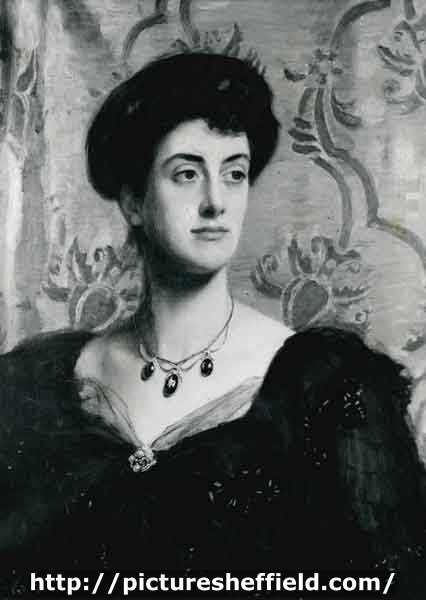
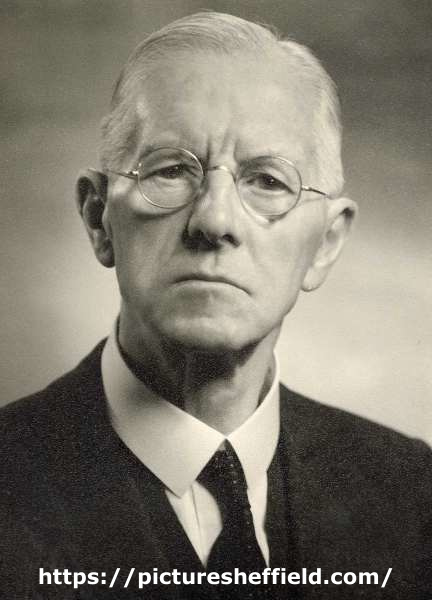
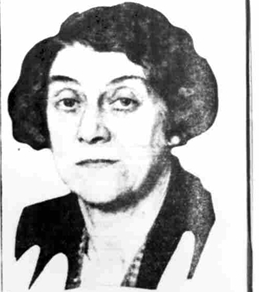
Lady Mabel Harriet Florence Smith, http://www.picturesheffield.com Ref arc03879

Her name is familiar in South Yorkshire because after the Second World War, her ancestral home, an exceptionally grand house near Rotherham, was given new purpose, leased in 1948 by the West Riding County Council from Earl Fitzwilliam and turned into the Lady Mabel College of Physical Education. It was named in honour of Lady Mabel Smith’s decades of service for the Education Committee of the West Riding County Council and her commitment to the children who attended the schools managed by it. With the raising of the school leaving age in 1944 and an increased birth rate in the years after the Second World War, it was clear to the County Council that in the years to come there would be a need for more teachers and so it took the decision not just to create new teaching training colleges in Yorkshire but to focus on the specialisms of which the Education Committee was proud. Backed by the Ministry of Education, it was decided to open three colleges, one for the teaching of physical education, one for music and the other for what was then known as ‘housecraft’. In each case, rather than building new and expensive institutions, the Council made use of three former houses, two of which had been stately homes, the third a nineteenth century hydro hotel. The largest, Wentworth Woodhouse, belonged to the Fitzwilliams and it was where Lady Mabel Smith lived, for periods of her life, before her marriage.
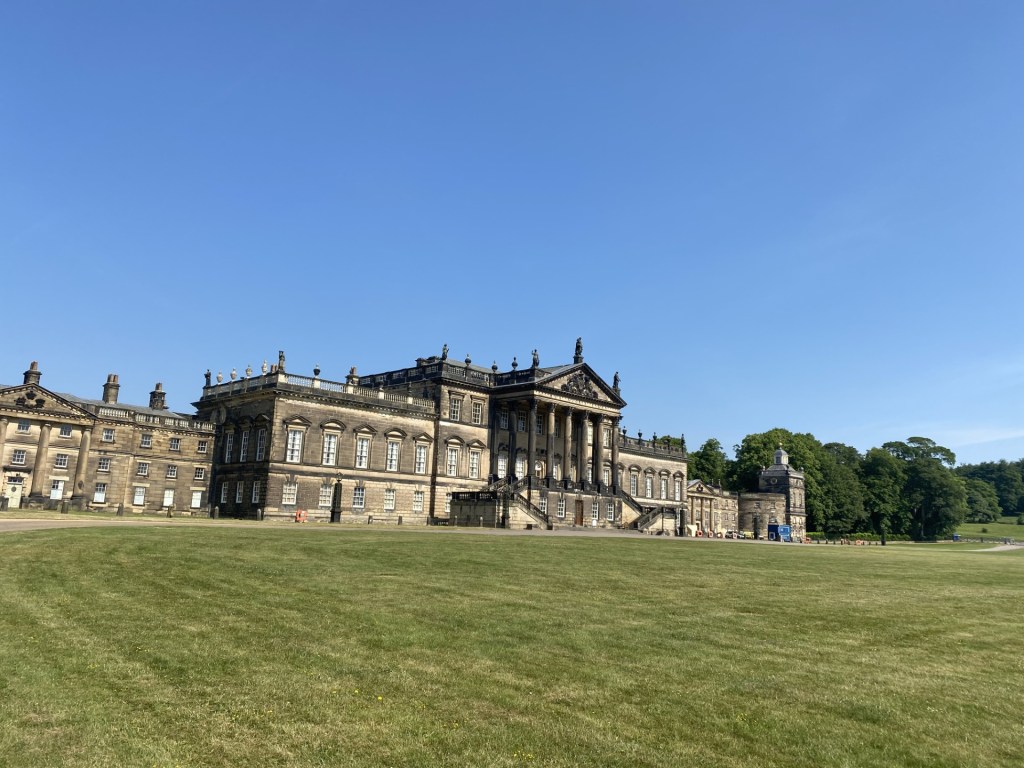
Wentworth Woodhouse, my own image

The decision to convert much of Wentworth Woodhouse into a college was a major factor in the house’s survival, at a time when a great many under used stately homes were demolished. No longer a college, the house is now run by the Wentworth Woodhouse Preservation Trust and it was on a visit here four years ago to admire its ambitious restoration project that I first developed my interest in Lady Mabel Smith. This eighteenth century house, purported to have the longest façade of any country house in England, was one of the first places I visited on coming to live in South Yorkshire. I had first glimpsed the house some years earlier when staying in the area and had been bought a copy of Catherine Bailey’s Black Diamonds (2007, Penguin) which tells the story of the house and its family, from its splendour days in the early decades of the 20th century to the eventual sale of the property in 1989.

Most of the work I have been involved in over the years has been about working class and labour history. I have focused a great deal on women in the British labour movement, including those who built up the Labour Party from its grassroots, such as Poor Law Guardians and local councillors as well as women who led, organized and joined trade unions to improve pay and conditions for workers. Aristocratic history has – fairly obviously – had no place in these studies whatsoever and my interest in stately homes has been confined to a combination of wondering at splendours, admiring architecture and garden design and wandering in extensive parklands. I wanted, however, a project to get my teeth into in the area that was now my home and preferably one which would serve as an introduction to its local archives, libraries and special collections. When that project became the work of Lady Mabel Smith, it was not as surprising as it might at first appear. Like many of the Labour women I have researched and written about, Lady Mabel Smith was a supporter of equal rights, a campaigner for improved health care and facilities for mothers and their children and a firm believer in the transformative possibilities of lifelong education. She wanted to see the eradication of poverty and of class barriers and for this she worked tirelessly her entire adult life. Her extremely privileged background made her experiences of life very different from those working-class women who became local politicians and activists but she was not unique in this.

Lady Mabel was by no means the only person of aristocratic heritage to join the Labour Party in the interwar years. Perhaps the most well-known was the Countess of Warwick who was drawn to socialism in the 1890s, standing as a Labour parliamentary candidate in Warwick and Leamington in 1923 (the seat went to Anthony Eden, who became Prime Minister for the Conservative Party in 1955). Others included Countess de La Warr and Lady Clare Annesley, the latter unsuccessfully contesting parliamentary seats three times between 1928 and 1931. There were also many men and women who, though not coming from the most noble families in the land, were privileged in upbringing, education and income and whose work within the labour movement was respected.

Countess of Warwick in 1905. Photograph by Henry Joseph Whitlock, Public domain, via Wikimedia Commons

Being selected and then elected to local government office was difficult enough for a woman of any social class, a hundred years ago. In Lady Mabel’s case, I do think that her connections with the Fitzwilliam family enabled her to bypass quite a few of the obstacles and prejudices faced by working class women but, nevertheless, women made up a very small percentage of elected members in English town halls. For example, Anne Baldwin’s study on the election of women councillors (see source list below) shows that between 1919 and 1938, there were just 309 women councillors elected on to English county councils (of an average of between 2700 and 3500 seats).

 Lady Mabel Smith made contributions to the development of the Labour cause in innumerable ways.  I am interested not just in the routes into public service that she took but in the nature of her work in the north of England, particularly in Yorkshire. I have divided the blog into eight sections, which highlight either particular periods of her life or aspects of her work and interests. I seem to have gathered a great deal of material and all I can aim to do here is to give a flavour of what I have discovered. I hope it gives an idea of what Lady Mabel Smith stood for. The many collections I have consulted (listed below) have enabled me to illustrate the breadth of her interests and commitments. The British Newspaper Archive has been of significant help in providing multiple examples of Lady Mabel’s political and social work; the press was at first keen to report on the work and the speeches of a member of such a prominent family. As time went on, however, and Lady Mabel became a popular and well known figure in her own right, she continued to be of interest to local newspapers and this has made my job considerably easier.

Although I provide some details of her early life, I do want to make it clear that this is not a biography but an account of the public work of Lady Mabel Smith. There is a short, interesting and personal account of Lady Mabel in Black Diamonds; in this, the author, Catherine Bailey spoke to two relations of Lady Mabel’s husband, who talked of the family’s views of her socialism and lifestyle. I have not sought to research Lady Mabel’s private life in any way other than what I have discovered in research in newspapers or in archival collections (those that I have used are listed below). I have, however, consulted The Personal Papers of Lady Mabel Smith, which are held at Rotherham Archives. These give a clear indication of her political and social interests; for my research, the most useful parts of this collection were the notes Lady Mabel wrote and used about a range of subjects upon which she spoke in public, including peace, Christian socialism, welfare, as well as matters relating to the judiciary and local government. There is a good deal more within this collection about Lady Mabel’s travels in the UK as well as the Mediterranean, northern Europe and India – postcards, booklets and photograph albums, some containing written notes.

I would like to say a big thank you to Helen Jackson for some wonderful conversations about Lady Mabel Smith and for her help and encouragement in this project.  

Finally, two technical points. Firstly, until 1902, when the title of Lady was granted by the King to the new Earl’s sisters, the correct way to refer to Mabel was as the Honourable Mabel Wentworth Fitzwilliam (then Smith). I have used Lady Mabel Smith, often shortened to Lady Mabel, for two reasons. The first is for simplicity and clarity – it is by the title of Lady and the family name of Smith which she is known. Secondly, I have used the shortened Lady Mabel as often as I can. My intention in so doing is not to sound over familiar or disrespectful. In the many reports I have read, I have never seen her referred to as Lady Smith but always with the inclusion of her first name as well as her title. In an attempt not to make the writing too clunky or formal, I have chosen Lady Mabel. This was, after all, how she was fondly spoken of in an interview with someone who worked with her in the early 1930s (mentioned in Post number 6) and I hope that she would be happy with me doing likewise here when writing about a woman who was clearly popular and approachable.

Secondly, to ensure that the posts flow as smoothly as possible, I have avoided use of footnotes and individual references. I do of course have these references to hand if required. Please do get in touch via my website contact form.

The posts are divided as follows

2. The Early Years 1870-1899

3. From Philanthropy to Politics, 1899-1914

4. The Move into Public Office

5. Lady Mabel Smith, Socialist

6. The Sheffield and Manchester University Settlements

7. The First World War

8. Closing Thoughts

Thank you to all the archivists and librarians who have helped me to access research collections. These are as follows:

Rotherham Archives

The Personal Papers of Lady Mabel Smith 174-F

Records of Rotherham Poor Law Union; Minutes of Guardian Meetings 274-A-1

Doncaster Archives

Minutes of the West Riding Labour Group DS 36

Sheffield Archives

Wortley Poor Law Union CA527

Guardian Minute Books SY164

Medical Officer of Health Annual Reports X1009 1922-7

Register Of Guardians’ Attendances CA527

Sheffield University

Sheffield Educational Settlement Papers SEP

Manchester University

Manchester Settlement Archive MUS including Annual Reports 1929-38

Labour History Archive and Study Centre, Manchester

Labour Women’s Conference

Labour Party Annual Reports

Labour Woman

West Yorkshire Archive, Wakefield

West Riding Education Committee Minutes 1916-39

Ten Years of Change, by Education Committee Chairman, WM Hyman

British Newspaper Archive

Newspapers consulted include:

Common Cause

Daily Herald

Daily Mirror

Eckington, Woodhouse & Staveley Express

Halifax Evening Courier

Huddersfield Daily Examiner

Landswoman

Leeds Mercury

Penistone, Stocksbridge & Hoyland Express

Rotherham Advertiser

Sheffield Independent

Sheffield Daily Telegraph

Sheffield Weekly Telegraph

South Yorkshire Times & Mexborough & Swinton Times

York Herald

Yorkshire Post & Leeds Intelligencer

Newspapers.com

Daily Herald

Daily Standard

Daily Telegraph

Guardian

Hull Evening News

Manchester Evening News

Newcastle Daily Chronicle

Newcastle Morning Herald

Observer

Weekly Examiner

Western Mail

Other Websites and online sources consulted

Ancestry UK www.ancestry.co.uk

Anne Baldwin (2012) ‘Progress and Patterns in the Election of Women as Councillors 1918-38’, doctoral thesis, University of Huddersfield ABaldwin PhD final text

British Newspaper Archive www.britishnewspaperarchive.co.uk

The History of the Workhouse, Peter Higginbotham http://www.workhouses.org.uk

Wentworth Woodhouse www.wentworthwoodhouse.org.uk

The Women’s Land Army and Women’s Timber Core www.womenslandarmy.co.uk

Some of the books consulted

Bailey, Catherine (2007), Black Diamonds; The Rise and Fall of an English Dynasty, Penguin, London

Barber BJ & Beresford MW (1979), The West Riding County Council 1889-1974, West Yorkshire Metropolitan County Council, Wakefield

Cooper, Lettice (1950), Yorkshire West Riding, Northumberland Press, Gateshead

Gerard, Jessica (1994), Country House Life: Family and Servants 1815-1914, Blackwell Publishers, Oxford

Graves, Pamela (1994), Labour Women: Women in British Working-Class Politics 1918-39, Cambridge University Press, Cambridge

Hollis, Patricia (1987), Ladies Elect: Women in English Local Government 1865-1914, Oxford University Press, New York

Horn, Pamela (2012), Ladies of the Manor: How Wives and Daughters Really Lived in Country House Society over a Century Ago, Amberley-books, Fakenham

Jackson, Helen (2021) People’s Republic of South Yorkshire, Spokesman, Nottingham

Jones, Melvyn & Jones, Joan (2021), Wentworth Woodhouse: the House, the Estate and the Family, Pen & Sword, Barnsley

Reynolds, Keith & Laybourn, Keith (1987), Labour Heartland: A History of the Labour Party in West Yorkshire during the Inter-War Years, WS Maney & Sons, Leeds

Rose, Michael & Woods, Anne (1995), Everything Went On At the Round House: A Hundred Years of the Manchester University Settlement, University of Manchester, Manchester

Scott, Caroline (2017), The Women’s Land Army in the First World War, Pen & Sword, Barnsley

Stocks, Mary (1953), The Workers’ Educational Association: The First Fifty Years, George Allen & Unwin, London

Stocks, Mary D (1956), Fifty Years in Every Street: the Story of the Manchester University Settlement, Manchester University Press, Manchester

Part Two. The Public Life of Lady Mabel Smith: Early Years 1870-1899

Mabel Florence Harriet Wentworth Fitzwilliam was born in London on July 14th 1870. She was the granddaughter of the sixth Earl Fitzwilliam, head of one of the richest aristocratic families in England, whose vast wealth was the cumulative result of inherited fortune, ownership of a great deal of land in England and Ireland, mineral rights, coal mines and the leasehold of ironworks. Mabel was the second born daughter of Viscount Milton, who, as the Earl’s eldest son, was in line to inherit the earldom and the family fortune. The Fitzwilliam ancestral home was the enormous Wentworth Woodhouse near Rotherham where, until she was 16, Mabel was a frequent visitor but not a permanent resident. At the time of the 1871 census, she and her sister, Laura, were residents in the Fitzwilliams’ London home, in the very fashionable Grosvenor Square, Westminster. The girls were in the company of a nurse, a nursemaid and several other servants, but their parents were absent.  It was not unusual for upper-class children to be left in the care of paid staff although it seems that the whereabouts of Viscount and Lady Milton were often accounted for by periods of ill health rather than by pressing social engagements.

By the early 1870s, Viscount (Lord) Milton required regular withdrawals from public life and lengthy periods of convalescence. He had become a Liberal MP for the West Riding in 1864 but by 1871, it was reported that he had been entirely absent from the 270 Divisions (votes) of the last session of the House of Commons. Many of his official duties as an MP and others as the eldest son of the Fitzwilliams, were cancelled due to his illness as he sought rest in Europe or at the family seat of Coolattin in County Wicklow, Ireland. As his health deteriorated, he resigned his seat at Westminster and took his family to Canada, where his third child – a son and heir – was born in 1872.

It was a bold journey on which to embark but it was not the first time Milton had taken his family abroad; in the winter of 1870, when Mabel was still a baby, they set off for Egypt. By 1872, Milton’s health was worsening, his wife was not only pregnant but suffering herself with chronic illnesses, and their daughters were aged just two and three years old. But Milton was used to travelling and he already knew Canada. Ten years earlier, he had embarked on a journey of discovery across North America, to prove the viability of a North-West land (trade) route through the Rocky Mountains to British Colombia. After the birth of his son, the Miltons built a house and established a family home in Virginia in the United States of America. They were not to be there long. Viscount Milton died in France in 1877, aged 38 and his wife and children – another daughter, Theresa, was born around 1875 –returned to England. It is unlikely that there was ever an unbroken spell of residence in Virginia for Lady Milton and her children; the son (and heir) was brought back to Wentworth Woodhouse late in 1872 to be christened. A newspaper obituary of the Viscount states that mother and children had made the journey back to Yorkshire on more than one occasion.  Many years later, Lady Mabel recalled travelling around England so extensively as a child that her mother improvised and used drawers padded with bedding rather than cots, presumably when visiting other households ( this story was told to demonstrate that mothers could do without expensive nursery equipment as long as they were practical and resourceful).

Evidence suggests that after Viscount Milton’s death, his wife and children came to live at Hoober Hall, on the Wentworth estate. They were not there when the 1881 census was taken, so it is not possible to see who made up their household. Instead, the family, along with some members of Viscountess Milton’s family, servants and a governess, was staying in Torquay. It may be that this was a visit intended to improve Lady Milton’s failing health; in 1886 there was a return to Torquay where she died, aged 37. From this point, it seems likely that the children went to live at Wentworth Woodhouse, under the care of their grandparents, the Earl and Countess Fitzwilliam.

Hoober Hall by Neil Theasby, CC BY-SA 2.0 https://creativecommons.org/licenses/by-sa/2.0, via Wikimedia Commons

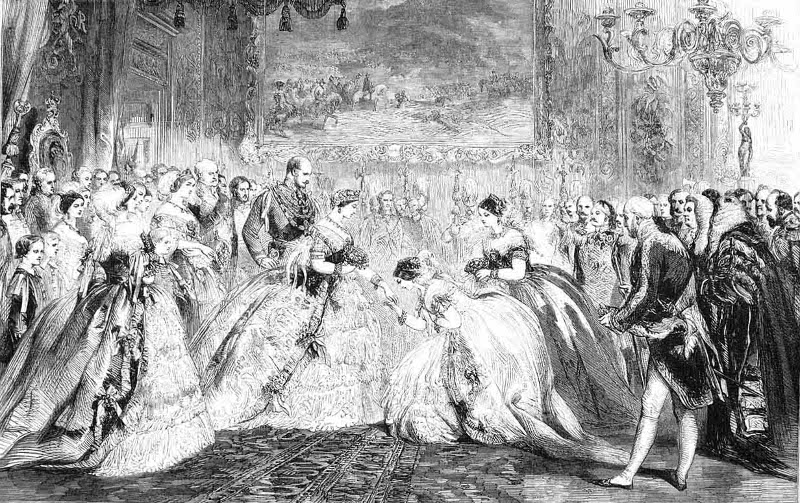
During the 13 years or so that she was at Wentworth Woodhouse, Mabel appears to have lived the life expected of a young, aristocratic woman. She was 15 when her mother died and just three years later, she was presented at Court to the Queen by her grandmother, the Countess Fitzwilliam. The preparations for this event were considerable, involving the strictest of etiquette, both in dress and deportment. This was followed by the business of ‘coming out’ into Society and attending all manner of social functions during ‘the London season’, which was traditionally regarded as the way that young women of the social and political elite would find suitable husbands. For the Wentworth Fitzwilliam girls, the ‘seasons’ meant spending time at the Fitzwilliam’s London home in Grosvenor Square, meeting, greeting and visiting within their social circle.

A few weeks after her presentation at Court, Mabel was a guest at the Queen’s State Ball at Buckingham Palace which was attended by the Prince and Princess of Wales, a host of other princes, princesses and senior members of the military and noble families. The most prestigious families in the country depended upon each other for company, mixing in London, forming house parties in grand homes around the country. In the years that followed, there were innumerable ‘fashionable weddings’ (the press description of aristocratic or society weddings) to attend and as a young noble woman, Mabel was a regular guest or bridesmaid at many of these, often in London. Before her own marriage, Mabel was a bridesmaid for her sister Laura in 1889, her aunt in 1895 and for her brother in 1896. His wedding took place in St Paul’s Cathedral, a clear indicator of wealth and status, and notable because few marriage ceremonies took place there in that period.

Grosvenor Square, London, late 18th or early 19th century; site of the Fitzwilliams’ London home https://commons.wikimedia.org/wiki/File:Grosvenor_Square.JPG

The Fitzwilliams’ grandeur meant that encounters with royalty were in no way out of the ordinary. Wentworth Woodhouse was sufficiently large and grand to host members of the royal family and as the premier family in south Yorkshire, this was to be expected. One such occasion during Mabel’s young womanhood was the prestigious visit of the Prince and Princess of Wales who stayed in 1891. Mabel, aged 21, was in the elaborate carriage procession that accompanied the distinguished guests to the official opening of Clifton Park in Rotherham. 

There is no way of knowing whether Mabel enjoyed the roles expected of her as a member of such an illustrious family or how she felt about the upper-class marriage market that she was expected to be part of in London. At least, however, one part of the upper-class countryside social calendar does seem to have held considerable appeal for her- and that was horse riding. Often described in the press as a fine sportswoman and a great horsewoman, Mabel regularly took part in hunt and race meetings in England and in Ireland, alongside members of her family and those admitted to the county hunting clan. One of these was William Mackenzie Smith, whom Mabel married in 1899. He too was described as an accomplished rider, following, it would seem, a family tradition. The Smiths were an established, well known Sheffield family and their connections with the Fitzwilliams went beyond a shared passion for equine sports; William Mackenzie Smith, who qualified as a solicitor in 1892, held a commission with the Yorkshire Dragoons, a voluntary cavalry force of whom in 1886 Earl Fitzwilliam became Honorary Colonel and Charles, his son, Lieutenant Colonel.

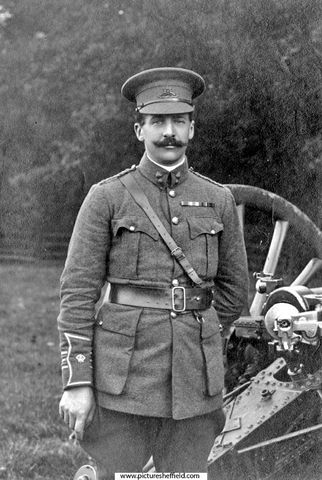
Colonel William Mackenzie Smith, who married the Honourable Mabel Fitzwilliam in 1899. This photo was taken between 1949-52 when Colonel Smith was Chairman of the charity, Sheffield Town Trust. I have not yet found one of him as a younger man. Ref u13951 http://www.picturesheffield.com
Lady Mabel Smith on the right, Sketch, 2 February 1916 British Newspaper Archive http://www.britishnewspaperarchive.co.uk
Members of the Grove Hunt, including Lady Mabel and Mr Mackenzie Smith, 1913, Sheffield Daily Telegraph, 21 November 1913 British Newspaper Archive, http://www.britishnewspaperarchive.co.uk

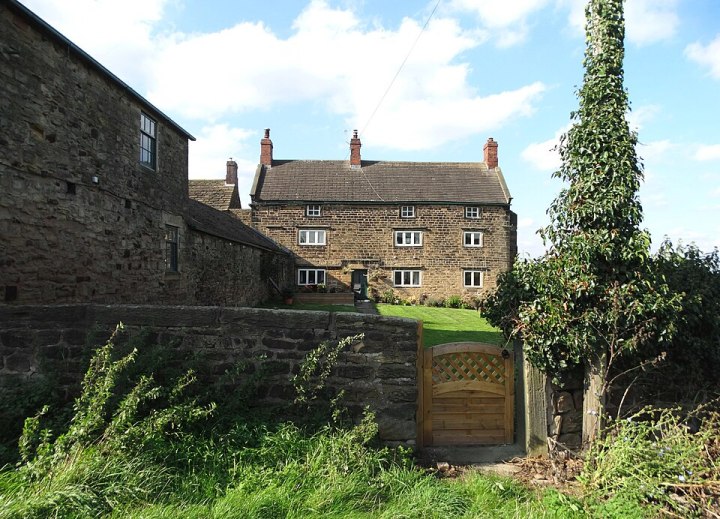
From her delight in riding and rural sports, perhaps came Lady Mabel’s keen interest in the land, which remained a significant feature of much of her life’s work, and which I shall explore further in subsequent posts. This post, however, concludes with Mabel’s wedding at St George’s Church in Hanover Square, Mayfair in London, where her parents had also married. Undoubtedly another ‘fashionable’ affair, the ceremony was officiated by Mackenzie Smith’s grandfather, the long-serving vicar of Ecclesfield, the Smith family’s parish. Accompanied by nine bridesmaids and two pages, Lady Mabel ‘looked exceedingly well in a wedding dress of rich duchesse satin and full court train, edged with chiffon and lace’ and the couple had a reception at the Grosvenor Square family residence, before leaving for the start of their honeymoon at Maltby Hall, a 15-room house in the village of Maltby (ten miles from Rotherham, 13 from Wentworth Woodhouse) owned or at least tenanted  by Mackenzie Smith. This was to be their home for over a decade.

Maltby Hall, near Rotherham. Date unknown but the Hall is no longer in existence. Chronicle/Alamy ref 2RG9FCH Individual license purchased

Part Three. The Public Life of Lady Mabel Smith : from Philanthropy to Politics 1899-1914

It was during these years that Lady Mabel Smith established herself as a campaigner, an advocate of adult education and as a Poor Law Guardian. It did not happen overnight. Her public life may have started in a rather conventional manner befitting a woman of her class and status but a few years into her marriage, it became clear that she did not merely attend public events as a matter of form or duty but with a deepening  interest and growing commitment.

In her early married life, she continued to fulfil the role expected of her as a member of such a prominent aristocratic family. In 1902 her grandfather died and her brother, William (affectionately known as Billy), became the seventh Earl Fitzwilliam. The London Gazette reported that it had been ordained and declared by the King that the Earl’s sisters were ‘to hold the same title, place, pre-eminences and precedence as if their late father had succeeded to the title’. Whilst the Mackenzie Smiths lived their own lives at Maltby Hall, the very title – Lady – granted by the King made it publicly clear that Lady Mabel’s bonds with her ancestral family remained. In addition, given Maltby’s close proximity to Wentworth Woodhouse, Lady Mabel was close at hand and therefore still able to play her part in the Fitzwilliams’ calendar of public engagements.

 As granddaughter and then as sister of the Earl, she opened bazaars, attended Sales of Work for charities including the National Society for the Prevention of Cruelty to Children (NSPCC) and the Girls’ Friendly Society (a Church of England endeavour to ‘protect’ working class girls and young women from the perceived dangers encountered in their working lives away from their families). There was nothing out of the ordinary in any of this; families of the nobility were expected to take an interest in and show support for charitable and philanthropic causes and projects, and in this the Fitzwilliams were no exception. As landowners, landlords and employers, the Earls had social responsibilities and duties towards their tenants, their employees and those in need in villages on or close to their estates. The Fitzwilliams had a good reputation for looking after people and as a result, they were well regarded and well liked locally. Lady Mabel had grown up observing the connections between the ‘big house’ and the villages surrounding it. She saw Fitzwilliams giving money to relief funds in times of acute hardship, her grandfather, for example, providing trucks of coal to the poor in harsh weather and inviting the inmates of the Rotherham Workhouse to an annual tea and entertainment at Wentworth Woodhouse.

Yet of course she also saw them hosting the King and Queen, holding summer and winter balls, hosting elaborate garden parties and dividing their time between their Yorkshire seat and their other properties and land. This was the world into which she was born and to which she showed allegiance by attending a great many official and civic events. Here I highlight just a few in which she took part in the early years of the 20th century. In 1905 she was among those of Yorkshire’s nobility to form part of a grand procession preceding the ceremonial opening of buildings at Sheffield’s newly established University. In the same year, she was part of another reception in Sheffield held for the Princesses Henry and Ena of Battenburg and Princess Beatrice of Saxe-Coburg, in the city for the unveiling of a statue of the late Queen Victoria. In 1902 she accompanied the Countess Fitzwilliam to the annual Sheffield Chrysanthemum Show at the Cutlers’ Hall as well as attending formal civic occasions at Sheffield Town Hall.

1905 visit of King Edward V11 and Queen Alexandra in Sheffield. Lady Mabel (not pictured) wore a dress in sapphire blue silk and white point lace and a black hat. Ladies Field, 22 July 1905, British Newspaper Archive http://www.britishnewspaperarchive.co.uk

There were some occasions when Lady Mabel attended as both sister and wife; in 1907, for example, as the Lady Patroness of the Queens’ Own Yorkshire Dragoons, of which her husband and her brother were distinguished patrons, she was a guest at the Yeomanry Ball held at the Town Hall Assembly Rooms in Rotherham. 

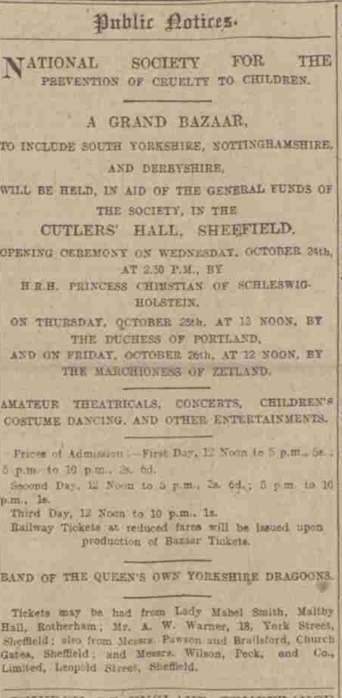
So far, so unremarkable and expected. But the evidence suggests that in this first decade of the 20th century, when Lady Mabel was in her 30s, she did not merely show up to fundraising events or lend her name as a patron. She worked hard behind the scenes to ensure their success. In 1906, a newspaper advertisement for a Grand Bazaar to be held at the Cutlers’ Hall in aid of the NSPCC stated that tickets for the event were available from Lady Mabel Smith of Maltby Hall, a pretty clear indication that her role was not just ceremonial. At the event, which raised over £2000 she was described by organisers as the ‘indefatigable honorary secretary’ who had personally written over a thousand letters, arranged for every stall present, made practical suggestions and arrangements and was, it was believed, largely responsible for the success of the bazaar. Even allowing for more than a touch of obsequiousness from those who presented her with a gift from the stallholders, it does appear that Lady Mabel took the secretary aspect of her role far more seriously than the honorary part.

1906 notice of a charity event for the NSPCC, with tickets available from Lady Mabel Smith. Sheffield Daily Telegraph, October 22 1906, British Newspaper Archive http://www.britishnewspaperarchive. co.uk

During these years, however, it is not just a capacity for hard work that is noticeable in Lady Mabel’s activities. From around 1909, it is apparent that she was not merely a fundraiser but a woman seeking to understand the causes of social injustice and work out where her support was most needed. To do so, she began to align herself with those who sought ways to effect change.

In the early years of the 20th century, there was considerable and increased political interest in the causes of poverty, for so long merely regarded as an inevitable and unavoidable part of an industrial economy. Socialist parties and organisations had been growing in Britain for at least two decades, and Yorkshire played a significant part, with the formation of the Independent Labour Party in Bradford in 1893. This was followed in 1900 by the foundation of the Labour Representation Society, bringing together socialists and trade unionists and changing its name to the Labour Party in 1906. In the same year, the new Liberal Government initiated a wide ranging programme of social reform, aimed at putting in place state measures to tackle some of the effects of poverty, unemployment and ill health. These included the first state old age pension, limited sickness and unemployment insurance and the introduction of National Insurance.

Plaque marking the site of the Labour Institute in Bradford where the inaugural conference of the Independent Labour Party was organised in 1893. My photograph

The controversy surrounding the funding of these reforms sparked a major political upheaval in Britain as the House of Lords refused to pass the Liberals’ Budget Bill which sought to impose a so-called ‘supertax’ on Britain’s richest families. The result was the Parliament Act of 1911, which limited the powers of the Lords to block legislation already approved by the House of Commons. In the circles in which Lady Mabel Smith still moved, the fury of the landed classes towards the Liberal Government’s intentions – her brother, was of course, in the House of Lords – was likely to have dominated many a conversation amongst the landed gentry but it was not this class view of the new legislation that was taking up Lady Mabel’s time or energies. Although she did not declare (or perhaps fully realise) her political sympathies at this time, the evidence suggests that she was reading, thinking and forming her own opinions.

In March 1910 Lady Mabel presided at a lecture at the Friends (Quakers) Meeting House in Sheffield. This was one of a series of talks about the Poor Law and this particular one was given by Dr Marion Phillips (who became a Labour MP in 1929), an investigator on the Poor Law Commission. This was set up by the Conservative Government in 1905 to examine all aspects of the current Poor Law system, which was by then over 70 years old. After some years of detailed investigations, the Commission ended up with two reports. The Majority Report did not favour the dismantling of the Poor Law, nor in fact did it approve of state intervention in the lives of the poor. In contrast, the Minority Report, written by Beatrice Webb, a Fabian Socialist, sought to end the current system which used the Workhouse as a deterrent. Dr Phillips agreed that the Poor Law was judgmental, inadequate and punished families who fell on hard times. She explained in her Sheffield lecture that the harshness of the present system meant that children were not receiving the care they needed to make their way in the world.

Lady Mabel, when introducing Dr Phillips, said that whilst everyone bore responsibility for the development of children’s lives, there was an extra duty to see the children of the Poor Law as ‘a special charge whose future was in the hands of the people’. Now whilst there is nothing specifically socialist in her words, it is perhaps significant that Lady Mabel was at this lecture at all, that she was willing to preside at a public event delivered by a woman who was not just a contributor to the Minority Report but a member of the Women’s Labour League,  which had close ties with the Labour Party. Three years later, Lady Mabel became a Poor Law Guardian herself, in a system still unreformed and to which I will return to this in my next post. For the rest of this one, here are some further examples of Lady Mabel’s continued journey into a political and social awareness that I think marked a decided shift from any notions of noblesse oblige as she moved towards a life of activism and campaigning.

A few weeks after Marion Phillip’s lecture, Lady Mabel gave a talk in Masbrough (now part of Rotherham) at the annual conference of the South Yorkshire District of the Women’s Cooperative Guild. The Guild, which arose out of the Cooperative Movement, was an organization for working class women to meet in friendship and to gain confidence in political work. Lady Mabel paid tribute to the work of the Guild in providing educational opportunities for working women to befit them for public and civic responsibilities and to do so with confidence. This was of enormous importance at a time when public office was dominated by men who had had plenty of time to learn the rules of engagement and to assume that the main roles belonged to them and would continue to do so. In the early 20th century, women were seeking greater involvement in the public sphere than they had been permitted in the Victorian age. It was of the utmost importance to have access to a good education which would fit them for more than the traditional domestic roles for so long expected of them. Lady Mabel spoke of self-improvement ‘as the best and noblest sign of national life’ and how important it was not just in readiness for public life but in the home. She told the Guild that educated women made the best mothers because they were able to communicate and express their ideas to their children. The Guild later published (I think it was later but I have not yet discovered the date) the text of a speech given by Lady Mabel entitled Education and the Workers’ Right to Live (which is part of the collection of her Personal Papers in Rotherham Archives), in which she summed up the need for education in the broadest sense of the word, fitting people for living, not merely existing. Workers, she believed, needed sufficient leisure time to allow them to develop and enjoy their talents through access to art, music and literature.

The Workers’ Education Association (WEA) was founded in 1903 to promote adult education for working class men and women. In Lady Mabel it found an enthusiastic advocate. In Sheffield in 1912 she explained to an audience the WEA belief that it was not a privileged upbringing that should be the gateway to the nation’s universities but brains and character. Through adult classes offered to working people in partnership with universities, the opportunities that had been denied to those who had had to leave school too early, could now result in what the WEA called ‘an open highway for education’. Lady Mabel worked with the Yorkshire Branch of the WEA to encourage attendance at its classes and her belief in the advantages to be gained through education and through adequate leisure time underpinned much of her work in the decades which followed this speech.

The March 1910 talk to the Women’s Cooperative Guild in Sheffield (mentioned above) highlights several useful pieces of information about Lady Mabel. She began her talk by admitting that this was the first time she had addressed a meeting ‘of that kind’, asking her listeners not to be too critical of her as she would try to do the best she could. Her meaning about this being the first time is unclear – the first time talking to an organization of women or about education? She was also, however, apologetic about her inability to express herself in the manner she would have liked, blaming this on her own education which was not, she admitted, as good as she now felt the need of. It was this, she continued, that led her to appreciate the value of education. She referred to her inadequate education on more than one occasion in the years that followed and so it is worth pausing here to question what sort of education Lady Mabel might have received as a girl and young woman.

I do not know if Lady Mabel attended school at any point in her childhood but it was relatively unusual in the 19th century for the daughters of nobility to be educated away from the home. Governesses were appointed when girls were around five years old and the education they then received depended almost entirely on the skills, confidence and teaching experience of the woman employed, with perhaps an odd extra tutor brought in to teach different subjects, including music or drawing. Towards the end of the 19th century, girls’ schooling in England was coming under greater scrutiny than previously yet the gradual improvements in standards and the broadening of the curriculum did little to alter the education of aristocratic girls. For them, things went on pretty well as they had done for generations of daughters who were lucky if their education went further than being taught their place in society, along with the necessary accomplishments to make good marriages. When Lady Mabel’s mother was in Torquay in 1881 with her children, the census shows that there was a governess within the household (Catherine Bailey’s interview with Colonel Smith’s niece also indicates that Lady Mabel had a governess). Although William (Billy) was there with his three sisters, he was only eight years old and as this was roughly the age at which sons were sent away to school, perhaps he had not yet started or was home for the holidays (Easter in that year was just a fortnight after the census was taken). Noble sons were educated to ensure that they would be able to run the family estate, enter politics or take a commission in the Army. Billy, heir to the Fitzwilliam title, did all of this. He went to Eton and then Trinity College, Cambridge before obtaining his Army commission. He toured India, served in the Oxfordshire Light Infantry during the Boer Wars and was a Member of Parliament by the time he was 22, inheriting the earldom when he was 30.

William Charles de Meuron Wentworth-Fitzwilliam (1872-1943), 7th Earl Fitzwilliam and brother of Lady Mabel Smith Ref s08587 http://www.picturesheffield.com

Suffrage and Equal Rights

As well as highlighting her views on working women’s education (and giving a little insight into her own education), that 1910 address to the Women’s Cooperative Guild also provides clues to Lady Mabel’s views on women’s position in society. Within her talk, she makes direct reference to the women’s suffrage movement, which, by 1910, was grabbing a great many headlines throughout the country. Lady Mabel stated that although the women in the audience did not yet have the parliamentary vote, ‘they were the wise mothers of those who assisted in that work’, making it even more important that women should be interested in the working of the State and the British constitution.

The campaign for the vote, which had been gathering momentum in the last quarter of the 19th century had, during the Edwardian years, seen the emergence of a more militant wing, frustrated by the slow progress of peaceful and traditional means of protest such as petitions and appeals. In 1903 the Women’s Social and Political Union (the WSPU), whom the press nicknamed the suffragettes, was formed in Manchester under the leadership of Mrs Emmeline Pankhurst. From the start, the motto of the WSPU was Deeds not Words, encouraging women to take direct action to draw attention to their demands. Tactics included the disruption of political meetings and ‘rushing’ the House of Commons, which involved hundreds of women trying to force their way into the Palace of Westminster. Women began to be sent to prison for acts of civil disobedience and for defying (often brutal) police attempts to deter them. 

In 1910 Lady Mabel pledged money to the WSPU. She also appeared on platforms at meetings with Adela Pankhurst (one of Emmeline’s daughters and the WSPU’s Yorkshire organizer, based in Sheffield), giving assurances that she would help with the Rotherham campaign for the vote, which was about to get underway.

After 1910 the WSPU advocated and encouraged more dramatic forms of protest. There was increasing frustration with the government’s intransigence on the question of women’s suffrage.  Window smashing was widely adopted and there were incidents of arson and damage to public and private property. There is no evidence at all that Lady Mabel supported this shift towards more dramatic forms of protest. In fact, many previous or potential supporters were alienated by the more extreme forms of rebellion, seeking instead to support the law-abiding National Union of Women’s Suffrage Societies, led by Millicent Fawcett or one of the many other suffrage groups. Yet in 1910, when Lady Mabel donated money to the WSPU and appeared in public with Adela Pankhurst, she cannot have been completely unaware of some of the WSPU’s acts of rebellion, particularly those in Sheffield. In 1908, Adela Pankhurst had tried to gain entry to the very grand and prestigious Cutlers’ Feast, at Cutlers’ Hall, intending to make plain her objection to the presence there of Liberal politician, Reginald McKenna, First Lord of the Admiralty. In 1909, she had been charged with a breach of the peace outside the Sheffield Assembly Rooms, where Liberal MP, Herbert Samuel, was due to speak.

Campaigning at the Attercliffe by election, Sheffield, May 1909. WSPU policy was to oppose all Liberal candidates in protest at the continued denial of the vote by the Liberal Government. Ref s02944 http://www.picturesheffield.com

Clearly, for a deferential (and often anti-women’s suffrage) press, it was much easier to report on Lady Mabel’s interest in women’s role in society if it was assumed that she was not associated with the suffragettes. In 1912 she gave a talk about the importance of an education that included home and house management and recognition  of a ‘higher ideal of the duties and responsibilities of the home maker’. The Evening News remarked on her thoughtful and sympathetic contribution to a discussion of women’s advancement, which was ‘in pleasant contrast to the methods of the Suffragettes with their parrot-cry of “Votes for Women”.

My feeling is that Lady Mabel was willing enough to show support at public meetings on an issue in which she felt much sympathy but that she did not get actively involved in campaigning. She kept her word to Adela Pankhurst and appeared in December 1910 at a meeting in Rotherham Town Hall at the start of the WSPU educational campaign in the town. The meeting’s speakers, however, were not all from the WSPU; there was a Labour councillor and a member of the non-militant National Union of Women’s Suffrage Societies on the platform.

In 1913 at a public meeting at Goldthorpe Adult School, on the subject of ‘Can Physical Force be an Agency for Good?’, Lady Mabel made her views clear; she was not, she said, in favour of militant methods but she saw the benefits that women’s suffrage had brought to New Zealand (which women gained in 1894), namely an increase in women’s experience and a closer connection between their public and private lives. This matched her beliefs in the importance of women’s participation in public life and in the raising of their status in the eyes of the world as homemakers and mothers.  She continued to show her support for women’s equal rights after (some) women were granted the right to vote in 1918. The fight was not over; it was 1928 before all women over the age of 21 were able to vote. In 1919 she wrote an article for The Common Cause, the newspaper of the NUWSS (now the National Union of Equal Citizenship), stating that,

If women are suitable to be entrusted with the care and nurture of infants, and the performance of all vital services to the child during the first years of its life, surely they are capable of helping to make and administer the laws that are framed for its future welfare and guidance.

This leads nicely into the next post and another important milestone in Lady Mabel’s career. In 1913 she was elected on to Rotherham Rural District Council as an independent member, a seat which also entitled her to sit on the Board of Guardians, the body which oversaw the administration of the Poor Laws. This move marked her formal introduction into public service and served as an education on matters of local government and, more crucially, into the realities of working-class lives in the area in which she lived.  In this, her firm belief in the equality of the sexes was a constant feature of her work, frequently highlighted in her appeals to women to serve on public bodies and especially on Councils. Her views on women councillors, widely shared by Labour women across the country, was that women had controlled family finances for generations, that they were skilled in home management and that they could readily use those skills in Council work. They possessed such sound understanding of what made a good, practicable, family house that it was only right that they should be involved in the designing of good quality council housing. In 1926 Lady Mabel said that we ‘shall not get things right until we have women working side by side with men in every sort of public work in the country’.

Part Four. The Public Life of Lady Mabel Smith -The Move into Public Office

In a press report of Lady Mabel’s election onto Rotherham Rural District Council in April 1913, the phrase ‘consents’ to stand’ was used, suggesting that she was invited to do so. Representing Maltby, she was the first woman to be elected to the Council (women were eligible for election on district councils from 1894 but not on County or Borough Councils until 1907). On rural district councils, being a councillor meant also being a Poor Law Guardian and in this part of the work, Lady Mabel joined several other women.

The duties and responsibilities of a Guardian dealing with the administering of relief to the poor were numerous and a conscientious Guardian could not do the job properly without learning a considerable amount about the lives of people living in permanent or temporary poverty.  The Poor Law Relief Committee (of which Lady Mabel became a member) assessed individual applications to the Board for relief, deciding on whether money would be granted to individuals or families for a designated period. This ‘outdoor relief’ was given to allow applicants to remain in their homes rather than live in the workhouse (indoor relief’). The workhouse was regarded by people as the last resort, particularly for those with families. Not only was it was degrading to lose home, possessions and independence but, once back out of the workhouse, it was very hard to start again, from scratch.  Relief cases were assessed individually and the amounts given out depended on the (perceived) needs of those applying. The cases were re-examined after a period of weeks and relief might be continued, increased or stopped. Sometimes warrants were sought to prosecute men who were believed to have deserted their wives and families, leaving them entirely dependent on Poor Law assistance.

There can be no doubt that the presence of women on Boards of Guardians – from the 1870s but in greater number from the 1890s when property qualifications necessary for election were lowered – had a significant impact on Poor Law administration. Arguably the women best placed to serve were working class women who more easily understood the challenges facing families in poverty and the practical necessities that could make the biggest difference to their lives. This included small comforts in the workhouse that had too often been ignored in the interests of economy. This was of course not always achieved; since their inception in 1834, there had been too many incidences of cruelty and injustice in the administration of the Poor Laws, increasing the deep-rooted fear of the workhouse in communities as a judgement and punishment. Unsympathetic treatment was often the result of ignorance and assumptions made by middle class Guardians who showed too little willingness to put aside their prejudices about the causes of poverty. But, as my earlier mention of the Poor Law Minority Report shows, attitudes were, by the end of the 19th century, slowly beginning to change as social reformers, such as Charles Booth and Beatrice Webb, sought to show that long established beliefs of the ‘undeserving poor’ were baseless in truth and ignored the realities faced by working class families living in poverty.

The roles of a Guardian were numerous. In addition to the assessment of relief, the Poor Law Guardians were responsible for looking after the welfare of the workhouse inmates. This meant monitoring the buying of food, fuel and clothing and dealing with the maintenance of the buildings.  They oversaw the appointment of staff for both the workhouse and its infirmary; the Hospital Committee worked closely with the Medical Officer to make sure that those in ill health received the correct care and that nursing staff were adequately trained.

By 1913, when Lady Mabel was elected, many Poor Law Boards recognized how unsuitable it was for children to spend long periods of time in the workhouse. In 1913, Rotherham, like many other Unions, sought instead to place children either in small ‘scattered’ homes under the care of an appointed house mother or married couple, or to find foster parents so that children could be ‘boarded out’. Here, their lives were closely scrutinised; children whose behaviour was deemed unacceptable could be sent back to the workhouse. The Guardians sought suitable employment or training for those of school leaving age. For girls going into service, the Children’s Homes Committee recommended to the Guardians that they should be equipped with suitable and useful clothing, including dresses, nightdresses, under garments, boots, aprons and a trunk for belongings. 

So where did Lady Mabel sit within this? On the one hand, as I have noted, she was well-known as a member of the Fitzwilliam family and the continued use of her title ensured that this could not be forgotten (and indeed suggested that she did not want it to be forgotten). As a Guardian, the newspapers noted that she was working in the tradition of her grandfather, who had been Chairman of the Rotherham Guardians. This was a link, certainly, but there was one very important distinction. The Earl’s position was an honorary one only; he (followed by his grandson, the 7th Earl) were certainly not expected or required to be ‘hands on’ in any way.

Her grandfather had issued invitations to the Rotherham workhouse inmates to come to tea at Wentworth Woodhouse, a tradition continued by the 7th Earl; in 1908 a ‘splendid tea’ was given in the Riding School, followed by a performance from the Elsecar Prize Brass Band in the pleasure gardens.  Perhaps witnessing such patronage did encourage Lady Mabel to establish her own such traditions. A keen gardener, she donated plants to the workhouse. She provided ‘entertainment and a lecture’ to the children in the scattered homes. By the 1920s, now living at Barnes Hall near Sheffield, and an elected member of the Wortley Rural District Council and its Poor Law Board, she provided tea at her home for the inmates of Grenoside Workhouse and for boarded out children. In 1923 there were sports and prizes presented by Lady Mabel as well as gifts of tobacco and cigarettes to the men and sweets, chocolate and ice cream for the women and children. One Christmas, she and her husband went to the Poor Law Infirmary with supplies of cake, apples, oranges, sweets, tobacco, Christmas crackers, toys and trinkets. On another occasion, Lady Mabel gave a lantern lecture in the workhouse about her father’s adventurous journey across the Rockies in search of a north-west land passage.

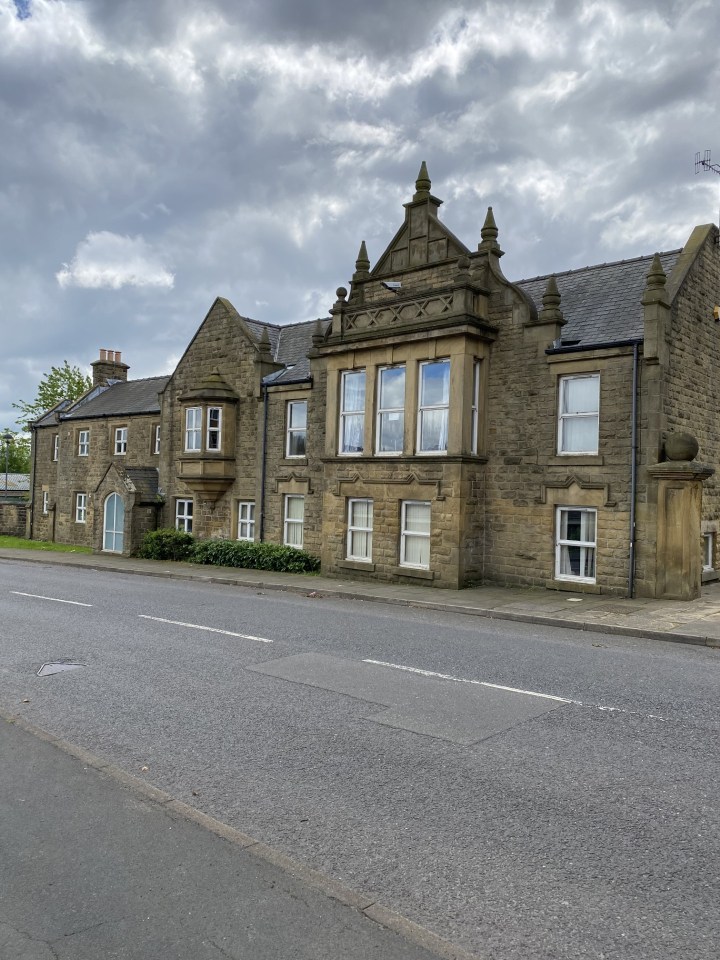
The administration offices of Grenoside Workhouse and Rural District Council. My photo.

If this had been the extent of Lady Mabel’s role on the Board(s), it is quite likely that no one would have questioned it. Such benevolence was expected from the aristocracy. But Lady Mabel did not limit her role to patronage. She appears to have been a diligent and thoughtful member and a high level of involvement from her was anticipated in the district on her election. Even allowing for a certain amount of obsequiousness, it is striking that a local newspaper noted in 1913 how ‘refreshing’ it was to see members of the landed and leisured classes taking an interest in democratic movements. Perhaps, however, the article notes, ‘we do Lady Mabel Smith an injustice in including her among the leisured classes for she is probably one of the most strenuous social workers in South Yorkshire’, citing her involvement with the WEA and describing her as being ‘thoroughly democratic in aims and sympathies’. She had ‘done a great deal for working-class movements in the district and her election to Rotherham Rural District Council gives her the opportunity of doing a great deal more’. Although being a member of the Fitzwilliam family certainly ensured her local respect and admiration, I do wonder if her marriage to someone outside the nobility also gave her a very useful degree of independence that helped her in her work as a councillor and a Guardian.

The last meeting of the Wortley Poor Law Guardians before the disbanding of the Boards of Guardians, whose duties were transferred to local authorities. Sheffield Independent 29 March 1930, British Newspaper Archive, http://www.britishnewspaperarchive.co.uk

Lady Mabel’s attendances at Poor Law Committee meetings compared well with those of her colleagues; in the year 1914-5, for example, she was at 24 of 26 Board meetings, 11 of 14 meetings of the Children’s Home Committees, 12 of 14 of the Hospital Committee’s and 23 of 26 of the Relief Committee’s. There can be little doubt that such close attention to the many issues dealt with by the committees – children’s education while in the care of the Board, maternity welfare in the workhouse, finding suitable foster parents, employing efficient medical staff, helping young people into training and employment, to name but a few – must have given Lady Mabel valuable insights into the lives of a class very different to her own. According to a discussion held at Mexborough Trades Council in May 1914, the Rotherham Board of Guardians gave more relief to the poor than any other Board in the country, with amounts up to one pound in cases where there were three or four children to be cared for within a family. For this, the Board had apparently been fined for overspending but had refused to pay the fine (surcharge) imposed. At this Trades Council meeting, there was a debate on a resolution calling on the government to provide pensions for widows with families (a measure that did not become law until 1925) and it was noted that Lady Mabel Smith had supported a similar resolution passed at the last meeting of the Rotherham Board of Guardians. This was of course a matter of great relevance to the Poor Law on whose assistance the widows of working-class men often depended. In the next blog in this series, I will talk about Lady Mabel’s ‘conversion’ to socialism but for now, it is interesting and possibly significant that her support for a resolution about social welfare is brought up at a meeting of trade union delegates, possibly indicating that she has already become known in her community as a supporter of the working classes. This may have been though her work with the WEA or she may already have become a Labour Party member. This too will be discussed in the next post.

For images and detail about Rotherham Workhouse I recommend the extensive research of Peter Higginbotham which can be found on his website The Workhouse: the story of an Institution and particularly relevant to this post is The Workhouse in Rotherham, Yorkshire, W. Riding

At some point just before or during the First World War, the Smiths (as I mentioned earlier) moved to Barnes Hall near Sheffield (which had been the Smith family ‘seat’ for many years) in the Ecclesfield Division of the West Riding (now part of Sheffield).

The move signified a geographical shift for much of Lady Mabel’s work; in 1918, she resigned her seat on Rotherham Rural District Council but was, as mentioned, elected to the Wortley Rural District Council and Board of Guardians in 1922, representing Ecclesfield. The biggest political shift, however, came in March 1919, when Lady Mabel Smith became the first woman to be elected to the West Riding County Council and she did so as a Labour member.

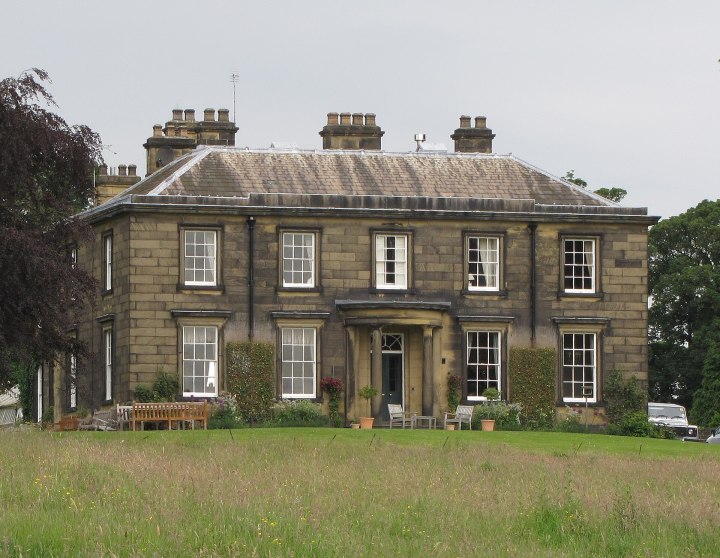
Barnes Hall near Grenoside, Sheffield, where Colonel and Lady Mabel Smith lived from before the First World War until the end of their lives Mick Knapton, CC BY-SA 3.0 https://creativecommons.org/licenses/by-sa/3.0, via Wikimedia Commons

Part Five. The Public Life of Lady Mabel Smith: Socialist

In March 1919 Lady Mabel Smith became the first woman to be elected to the West Riding County Council and she did so as a Labour member, representing the Division of Ecclesfield, (to the NW of Sheffield and at that time not part of the city). Barnes Hall, where she and her husband now lived – and remained for the rest of their lives – was within the ward and there they were well known and well regarded.

1919 marked the start of a long association with the Labour Party for Lady Mabel. She remained on the County Council until not long before she died in 1951, serving on many different Committees, including Education, Housing, Public Health, Finance and Agriculture. She became an alderman for the first time in 1927. In addition to her County Council work, she was an elected Labour member of Wortley Rural District Council from 1922 until 1934, serving also as a Poor Law Guardian. She was a well-known figure in the Labour Party at both regional and national levels and in 1930 she was voted on to the Party’s National Executive for the first time, a position she occupied again from 1932 to 1935.

Lady Mabel Smith, 30 December 1932, Daily Herald, British Newspaper Archive http://www.britishnewspaperarchive.co.uk

More than once, it looked likely that Lady Mabel would stand for Parliament as a Labour candidate. In 1923 she was nominated by Ecclesfield Labour Party for the Penistone Division but was not selected. This was followed by press rumours that she was expected to become a candidate somewhere in the south of England, although this never happened. In 1927 Lady Mabel gave provisional consent to be nominated to be the candidate in Sowerby Division (in West Yorkshire), turning down an invitation from Richmond (North Yorkshire) to stand there. In the event, in 1928 she declared herself unable to accept the Sowerby nomination, publicly explaining that this was because she had recently taken charge of three fatherless children and therefore would not have time to commit to the work. Whilst I have not delved into this, I cannot think that it would have been a permanent arrangement, for her life in the early 1930s became even busier than usual (see Blog Post Six). There was no further talk of parliamentary seats after this.

Largely because of her position and her title, but also because of the relative novelty of women speaking in male dominated spaces, many of Lady Mabel’s attendances and speeches at Labour Party meetings and events were noted by the press. This ensures that there is a wealth of detail in newspapers on which to draw when seeking to determine the direction her work took.

Why Labour?

Lady Mabel was no stranger to the County Council, having been a co-opted (non-elected) member of the Education Committee since before the War but her decision to stand in 1919 as a Labour candidate seems, on the face of it, to be a new departure for her. It does, admittedly, seem an unlikely move for an aristocratic woman, whose brother was, until his move into the House of Lords in 1902, a Tory Member of Parliament and one of the biggest landowners in the country. Yet, when we take a closer look at Lady Mabel’s background, as well as her lifelong work, and the issues with which she was most deeply concerned, her decision appears perhaps less surprising.

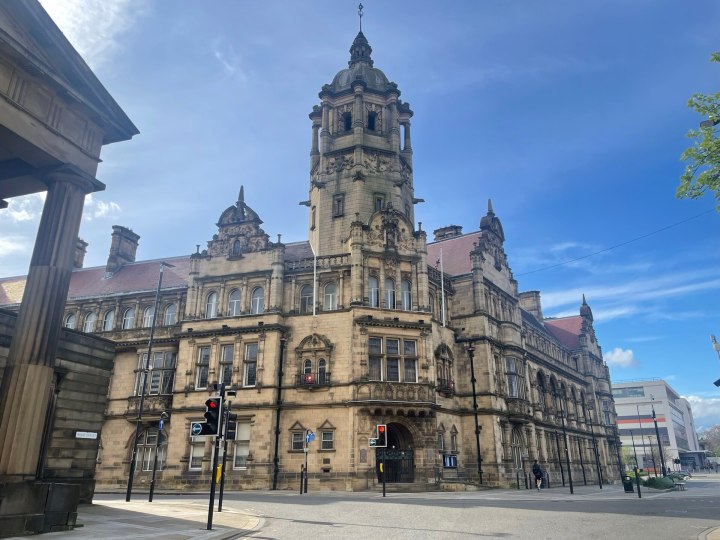
Home of the West Riding County Council in Wakefield until its abolition in 1974 Mtaylor848 This file is licensed under the Creative Commons Attribution-Share Alike 4.0 International license.

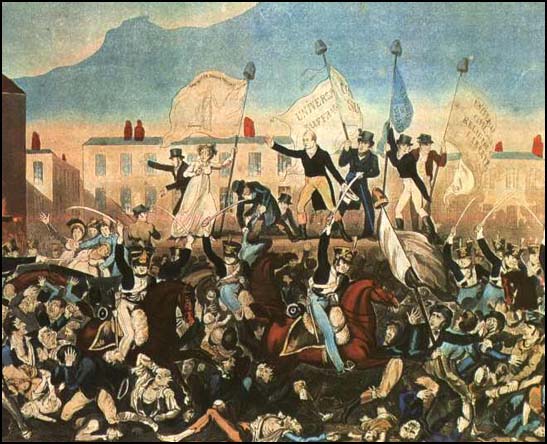
In many ways, Lady Mabel’s membership of the Labour Party was a natural gravitation to a party that was rising at the same time as the Liberal Party was losing its position as Britain’s second largest party. Both her grandfather and her father had been Liberal MPs (many large aristocratic families were of Whig/Liberal tradition) and Lady Mabel spoke publicly of her family’s Liberalism. On one occasion, she explained that an ancestor was denied the privilege of serving as the Lord Lieutenant of Yorkshire because he had chaired a meeting protesting at the savage treatment of people gathered in St Peter’s Fields in Manchester in 1819. They had gone there to hear speeches about democracy and parliamentary reform but after magistrates ordered the arrest of some of the speakers, the Yeomanry rode into the crowd, killing at least 18 and injuring hundreds of men, women and children.

Richard Carlile was due to speak at St Peter’s Fields, Manchester on 16 August 1819. He published this image shortly after the Massacre in which at least 18 people were killed and hundreds injured. This file is licensed under the Creative Commons Attribution-Share Alike 4.0 International license.

In a speech about the country’s deepening coal crisis in 1926, Lady Mabel highlighted what she called a once vital connection between Labour and Liberalism, although by now, she told her audience, the Liberals ‘had neither aim nor programme’.  Despite her commitment to socialism, I think this is an acknowledgement of the Liberal Party’s radical past, including its once strong connection with the miners before the rise of the Labour Party.

When asked once why she had chosen to stand as a Labour councillor, she explained that the Labour Party’s policy and outlook coincided more nearly with her own than those of any other Party. A former chairman of the County Council implied as much when speaking of Lady Mabel upon her death in 1951. Sir Bernard Lomas described her as being of ‘socialist persuasion’, but largely, he thought, because she felt that there was so much to be done to improve the lives of women and children in the county.  She was aware of adverse reactions to her political sympathies; in 1927 she told a meeting that ‘some people are surprised that I am in the Labour Party because it is not considered quite nice’ but she was, she explained, already a socialist when she joined the Party. 

At another Labour gathering, she said that it was largely through reading Philip Snowden many years before that she had become a socialist. She did not know anyone, she said, who had such a grasp of figures and such a knowledge of finance as Snowden (Snowden became Chancellor of the Exchequer in the first Labour Government in 1924). As a Christian, she may also have admired Snowden for his early writings on the links between Christianity and socialism. Christian Socialists believed that Christ’s teachings were an ethical basis for equality and social justice, underpinning all socialist ideals. In preparation for a lecture, Lady Mabel wrote that ‘it is Socialism which seems to me to be the practical expression of our Christianity’ and certainly both faith and socialist ideology were at the heart of all of her work.

Lady Mabel had sufficient freedom, independence and wealth to enable her to pursue her own interests thoroughly. Just as her remarks about Snowden give the impression that she always made sure she was well informed, she determined to make sure that she understood the realities facing those she represented in her work. For example, in 1938, she spoke of her belief that an extra year at school was necessary to adequately prepare children for work in coal mines. She explained that she made a point of going down a coal mine every year, to see the conditions and to keep abreast of improvements. Whenever anybody talked to her about mines, she always asked them if they had been down one. If they replied no, ‘then I tell them they have no right to talk about what they have never experienced and I change the subject’. This was typical of Lady Mabel; she knew she did not have direct experience but believed that it was her duty to educate herself in order to offer as informed an opinion as possible.

Lady Mabel did not attempt to hide or deny her class difference. She shared much in common with Labour members committed to a more equitable society in which there would be good housing, health care and education accessible to all. Addressing a meeting in 1921, she said that she did not recognise class distinctions and ‘was concerned neither with leavening down nor raising up [and] concerned only with marching forward’.

She was also adamant that despite accepting Labour’s invitation to stand for the West Riding County Council, she knew she could not adequately represent working people because she had no personal experience of the conditions of their class. She was, she insisted, merely ‘holding the door open until there came along other people who could’. By this, she did not mean that there were insufficient working people capable of doing the job, but that they had not as yet been afforded too few opportunities to do so.

It was, I would argue, a mark of her strength of character that she was bold enough to stand up for what she believed was right, despite possible opposition from her family. It is, for example, well known locally that during the six-month long miners’ strike following the General Strike of May 1926, the Earl and Countess Fitzwilliam erected marquees in order to cook and provide meals for the children of the miners who worked in their pits. There is no doubt that, as we have already seen, the Fitzwilliams assumed significant responsibility for the welfare of the workers who dug their coal. Their help was of undeniable importance to the health and well-being of families who found themselves in dire need. But what Lady Mabel, the Labour Party and trade unions sought was an end to the entire system that depended on the individual paternalism of local coal owners. Miners did not want to feel grateful for handouts in times of crisis; they wanted a living wage and an industry that treated them with fairness and respect.

As the crisis in the coal industry loomed in 1926, Lady Mabel defended the miners, who were facing wage reductions and an increase in working hours. At a Labour Women’s meeting, held just days before the General Strike began (when the miners were locked out by the coal owners for refusing to accept more wage cuts), Lady Mabel said that miners and their families could not possibly live on wages any lower than those they now received. This was no exaggeration; miners’ wages were extremely low and falling. She wanted people to understand that low wages for miners meant low wages for all other workers in the country and unless they all stood with the miners in their hour of need, ‘your own turn will come quicker than you imagine or realise’. She went on to explain her support for nationalization, not just of the coal industry but of the land; minerals, she said,

…had formed in the earth without any help from the landowners. Without the work of the miner, it was, moreover, useless. Whoever heard of a royalty owner helping to bring coal to the surface?

Housing

The issues with which Lady Mabel was most involved – at least those about which most of her speeches were reported  – were largely the ones that dominated so much of life in the inter war period and filled the political agenda. Recessions in the 1920s and the Great Depression of 1929-32 led to high unemployment, short time working and wage reductions, particularly in Britain’s traditional industries, tipping more and more families into poverty. In West Yorkshire, for example, the three major industries – coal, engineering and textiles – all experienced severe slumps in the 1920s and 30s. Adequate health care remained out of reach for too many working-class people and infant mortality was stubbornly high in many areas. Making life even harder for families was a severe housing shortage and the need for local authorities to provide good and affordable council housing remained of enormous importance throughout the interwar years. In 1921 Lady Mabel spoke of her belief that the housing situation ‘was the fundamental evil of the present time’, with insanitary conditions and overcrowding causing ill health. If housing was better, she said, the hospitals would be far less full.

Early on in her first term at the County Council, her passion and fury about poor housing landed her in hot water. Talking in the mining village of Denaby Main in 1920, she sought to explain to the community that it bore responsibility for any new housing built in the village, meaning that they should object to housing that was substandard and inadequate. She warned against housing like that built in the 19th century by the Denaby and Cadeby Colliery Company. Are you going to see, she asked the audience, streets, open courts and all the other horrors which there are here, perpetrated again? She went further;

It must be difficult, and nearly impossible, to bring up your children under proper moral conditions. I don’t think there is a tree within sight at  Denaby. However you can bring up children at all in such surroundings surprises me.

Her speech caused not just surprise but deep annoyance in Denaby Main village, which had defended itself some 20 years earlier from a Christian newspaper which had declared it to be not just ‘The Worst Village in England’ but a ‘hell upon earth’.  Although improvements had been made since, there were still houses relying on shared privies in courtyards which had no sewage pipes. This caused multiple threats to public health, particularly in summertime; Lady Mabel recalled the time she had seen a cart carrying refuse from the privies pass underneath a washing line, dirtying the clean clothes as it did so.

Denaby and Cadeby Colliery Company brought an action of slander against Lady Mabel, its lawyers arguing that she had deliberately sought to interfere with the company’s endeavours to attract more miners to come to Denaby Main. Lady Mabel was adamant that her intention had not been to criticize any one company but to emphasise the importance of collective action in a community to improve conditions for the future. She said that she had not wished to infer that Denaby was much worse than any other place or that it was ‘hopeless’. She was fined £5 and ordered to pay costs. This was a relatively small sum but sufficient to show that the judgement upheld the colliery company’s insistence that, as a well-known woman in the area, her views were likely to carry considerable weight and influence.

There is no way of knowing what impact, if any, the outcome of this case and the publicity surrounding it, had upon Lady Mabel. She was, however, supported in her action by the West Riding Labour Group so she knew that she was not entirely isolated.  There were no further slander cases but she continued to speak her mind all her life even if it meant going against the zeitgeist. In 1950, aged 80, she announced her intention to serve on the reception committee of the Sheffield Peace Congress. This conference, to be held at Sheffield’s City Hall, was convened by the British Peace Committee, which was regarded by the Labour Government as communist-led. Labour announced that attendance was ‘incompatible with membership of the Labour Party’, but Lady Mabel, who had spoken many a time on the necessity of peace during the 1930s, was not willing to be told what to do on a matter so fundamental to her beliefs. Despite her long years in the  Labour Party, she was threatened with expulsion, although in the end, her local party (Penistone) decided against taking any disciplinary action against her.

Peace

That international peace was of the utmost importance to Lady Mabel is evident from her Personal Papers, held at Rotherham Archives. She was a firm believer in the League of Nations, set up after the First World War to promote international peace and to improve the health and working lives of the world’s population. In a 1923 speech in Elsecar, she referred to peace and disarmament as ‘practical Christianity’ and more than a decade later, she was still defending the League, which was being undermined in the face of rising fascism. Her speech preparation and notes explore how peace is always undermined by fear and by threats. What most of us say, she wrote, is that we want peace but that other people won’t let us have it so we must prepare for war [whereas] surely preparing for peace means giving up war.

The specific role that women could play in international peace was stressed by many Labour women during the 1920s and Lady Mabel’s lecture notes refer to the importance of women’s work in international politics. Women of all nations, she wrote, ‘have the same needs, ideals, hopes and fears’. In the 1930s, her views were closely aligned to the Labour Party’s views on the need for continued co-operation with the League of Nations in pursuit of the notion of Collective Peace and the raising of living standards across the world.

Schools and Education

Lady Mabel is probably most associated with the work that she did on the Education Committee of the West Riding County Council. Its records show that she was a co-opted member from at least 1916, perhaps due to her known connection with the Workers’ Education Association. The County Council faced significant challenges in the years after the First World War, striving to make sure that there were enough secondary school places to cope with the impact of the raising to 14 of the school leaving age in 1918. It also sought ways to provide secondary education to those children whose parents could not afford to pay fees and it became the Education Committee’s policy to give scholarships to all pupils who scored 60 per cent or above in the county examination. By 1931 just over 70 per cent of those pupils attending secondary schools did so with scholarships. 

The Committee’s agenda, however, was broader than just the provision of school places and included a commitment to opening new child welfare centres, to ensure that all children, from birth, received the best possible start in life. Lady Mabel firmly believed that putting the child before the system was essential. She said that in the past, the State, with all its emphasis on compulsory education, had paid too little regard to the early life of the child. Welfare clinics sought to promote good health and they offered practical training for parents in how to best care for their children. Speaking in 1927, Lady Mabel said that ‘what has been good enough for the past generation is not good enough for the present, as times have changed and the pace of life is very different’. 

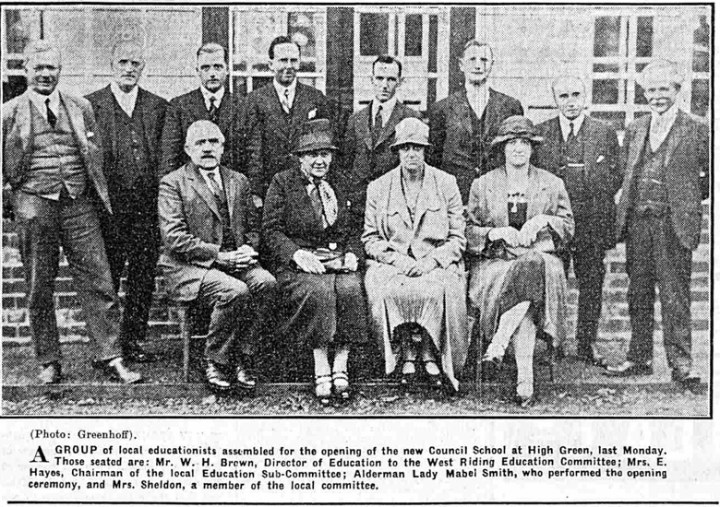
Most of the welfare centres were housed in existing accommodation such as village or church halls, but in 1937, Lady Mabel was at the opening of a new combined school and welfare centre in Sprotborough. This, Richmond Hill Council School and Child Welfare Centre was the West Riding’s first purpose-built centre, where the child’s well-being was considered from its first attendance, right through to the provision of green, open spaces surrounding the classrooms and playgrounds. This concept of child centred education may seem familiar and even obvious to us today, but the idea of planning schools with such holistic considerations for children’s welfare was fairly new in the interwar years. When, for example, a new elementary school was built in Rotherham in 1928 to accommodate rising population, it was done so with an asphalted playground, playing fields and with the school buildings on the ‘right side of the Colliery so that the prevailing winds would carry away the smoke and grime’. At its official opening, Lady Mabel quoted educationalist and nursery pioneer, Margaret McMillan, that a school ‘should be a place which the children never wanted to leave’.

Her involvement in education was, as in everything she did, thorough. When she died in 1951, it was noted how much she would be missed at Woodhouse Grammar School in Sheffield, at which she had been the Chair of Governors for nearly 30 years. At the school’s speech day in 1939, she summed up her definition of education (after again drawing attention to her own, much regretted, lack of education), which I have summarised as follows;

The official opening of High Green Council School in 1928. Penistone, Stocksbridge and Hoyland Express 29 September 1928, British Newspaper Archive, http://www.britishnewspaperarchive.co.uk

Thinking for oneself and sticking to one’s views; training of character, body, mind and soul; fitting each child for the future best suited to them; learning how to use and enjoy leisure time. The real value of sport was to be able to compete in games whilst being the best of friends away from the playing field; learning to have faith and courage in one’s self.

This, I think, clearly shows Lady Mabel’s belief in and commitment to the children of the West Riding. At the same speech day, tribute was paid to the role she had played in ensuring that, no matter how poor their circumstances, they would still be able to attend secondary school.

Lady Mabel’s role in the opening of Ecclesfield Grammar School in 1931 for 330 pupils was acknowledged by those who attended its official opening ceremony, one commenting on how, ever since Lady Mabel had come to Ecclesfield, she had taken them all by storm by her solicitude for the welfare of her neighbours. She was of course not solely responsible for bringing the project to fruition (and had worked with a Conservative councillor to press the case for the school) but her commitment continued with her chairmanship of the school governors.  In the opening speech, Lady Mabel quoted writer and philosopher Herbert Spencer, saying that ‘education is to fit us for complete living’. She told the audience that although the need for the school was first recognised in 1920, it had taken another five years before the land was purchased by the County Council (largely due to the constraints of post war austerity).

The Official Opening of Ecclesfield Grammar School in 1931, 3 October 1931, Penistone, Stocksbridge and Hoyland Express, British Newspaper Archive, http://www.britishnewspaperarchive.co.uk

Her commitment to making sure that children received the best possible education was one of the reasons why, in 1933, she opposed an Education Committee report which declared that the employment of married women teachers was ‘unwise on educational grounds’.  Despite the 1919 Sex Disqualification (Removal) Act, women had no entitlement to keep their teaching jobs once they were married. This ‘marriage bar’ was applied in many professions in the interwar years but was robustly challenged by women who, like Lady Mabel, believed in equality of opportunity. Surely, she argued, it was an education committee’s job to find the best teachers for schools; she had never yet had it proved to her that a woman became a worse teacher when she got married. Married women, she insisted, had the same right as all other citizens to do the work for which they were most fitted. Despite her opposition (and that of seven others), the Report was adopted by the County Council. The resolution was that the case of each married woman teacher would be reviewed on its merits but that, if in the opinion of the Council, no personal hardship was likely to be felt, the contract would be terminated. In the future, it was agreed that all married women teachers in the service of the County Council would be reviewed annually. Whilst it stopped short of the immediate sacking of all married women teachers, there were still councillors who did not think the measures went far enough. Similar arguments went on in town halls across the country, with Labour women doing all they could to defend married women teachers against the charge that they ought to step aside and let their jobs be taken by unemployed male teachers, particularly during the Depression years. In 1944 the Education Act ended the marriage bar in teaching, providing justice for women certainly, although the change was due in no small measure to a national shortage of teachers. And equal pay for teachers would take yet another decade to become law.

Part Six. The Public Life of Lady Mabel Smith: The Sheffield and Manchester University Settlements

As we have seen, one of Lady Mabel’s central interests was adult education and in particular, the work of the Workers’ Educational Association (WEA) and the adult schools which were growing in popularity in the years before the First World War. At the start of 1931, despite her already considerable workload in the West Riding, she became joint warden of the Manchester University Settlement which was based in Ancoats, an industrial and heavily populated area to the northeast of Manchester’s centre . This was a residential job in which she remained until her resignation at Easter 1933. To explain her role and the possible reasons why she became involved in a project away from her home and her native Yorkshire, we first need to wind back a few years.

The principal idea behind the Settlement Movement, which began in London’s East End with the establishment of Toynbee Hall, was that middle class volunteers would live among their working-class neighbours in poor areas, helping to improve the quality of people’s lives. Men and women, often university students or graduates, lived in settlement houses (which were single sex) and helped to set up social clubs and educational classes as well as becoming involved in neighbourhood social work. The idea was to enhance and enrich the quality of life, bringing communities together and listening to ensure that what was set up was exactly what was needed, rather than what volunteers might have believed or assumed was needed. 

Toynbee Hall, Commercial Street, London, E1, opened in 1884, This file is licensed under the Creative Commons Attribution-Share Alike 4.0 International license.

During the First World War, Lady Mabel was involved with the Neighbour Guild Settlement in Sheffield. She became President of its Horticultural Society and worked with its Women’s Group to turn a plot of land next to the Settlement House in Oxford Street into an allotment. The soil was examined by a gentleman from Leeds University who advised on the best vegetables to grow, such as potatoes (although Lady Mabel noted the show of these was rather disappointing). Lady Mabel explained that just as important as the practical and educational value of growing vegetables, was the need for beauty in members’ lives. There was to be a flower border and the women experimented to see which plants would grow best in ‘the volumes of smoke rolling across the city’. Lady Mabel offered her own advice, saying that in the coal districts it was well known that auriculas, lilies of the valley and carnations thrived in soot and smoke. Her hope was that the wartime experiment would encourage the women to seek gardens of their own which in turn would have health benefits; ‘every house’, she said, ‘ought to have a little garden’ of its own.

Members of the Women’s Meeting of the Neighbour Guild Settlement, Sheffield, during the First World War. Sheffield Daily Telegraph 31 March 1917, British Newspaper Archive, http://www.britishnewspaperarchive.co.uk

The Neighbour Guild Settlement was succeeded by the Sheffield Educational Settlement, based in Shipton Street in Upperthorpe. This was initially founded by the YMCA but from the early 1920s, the association between the two ceased and the Settlement, under the wardenship of Arnold Freeman, formed its own small Council, which included several influential people to direct its work and help to seek funds for its many activities. When Lady Mabel consented to join this Council in the early 1920s, she joined many people of local influence, including the Bishop of Sheffield and the Vice-Chancellor of Sheffield University. The aim of the Settlement was ‘to help to establish in the city of Sheffield the Kingdom of God’, explaining that,

By the “Kingdom of God” we mean streets along which it is a pleasure to walk; workplaces in which people enjoy working; public houses that are centres of social and educational life; kinemas [sic] that show elevating films; schools that would win the approval of Plato; churches made up of men and women indifferent to their own salvation; an environment in which people “may have life and have it abundantly”.

By “Education” we mean everything by means of which people may become more spiritual; everything that enriches human beings with That Which described in three words is Beauty, Truth and Goodness, and described in one word is GOD.

It is easy to see why Lady Mabel, who had a strong Christian faith and a belief in the value of adult education, productive leisure time and the importance of beauty in people’s lives, was supportive of the aims of the Settlement. In 1919, in a letter of endorsement, she wrote of her admiration, adding that she considered its most valuable work to be the development of a spirit of comradeship between men and women of all sections of life. The Settlement had a Literary and Dramatic Circle, putting on performances in its own ‘Little Theatre’ in Shipton Street. In addition, there were lectures, a Homecraft Club, elocution lessons and musical events. 

A performance of ‘Fanny’s First Play’ by GB Shaw, put on by the Sheffield Repertory Company at the Little Theatre, Shipton Street, Upperthorpe, Sheffield, September 1921 Ref t02910, http://www.picturesheffield.com

A hundred years on, it is perhaps a tricky concept for us to understand; the notion of seeking to ‘better’ working class people with guidance from middle class volunteers with their ideas of what was wholesome and educational is an uncomfortable one, particularly with the clear spiritual message set out by Freeman. In a public letter of support in 1923 (for the Settlement was always in great need of funds), Lady Mabel pointed out how much of people’s working lives was spent alone, particularly women’s, making it very important to spend recreation and education time in the company of others. She donated money and provided goods (usually eggs from Barnes Hall) to the fairs and bazaars that were held to raise money, although in 1923, she withdrew from the Council, explaining that her local and County Council work made involvement in Sheffield very difficult (she was by now a ‘twin hatted’ councillor, for the West Riding and for Wortley Rural District Council). She remained, however, a patron of the Settlement for the rest of her life.

Lady Mabel’s decision to accept the role of residential co-warden at the Manchester University Settlement (so called because of the support and educational links provided by Manchester University) is perplexing, despite her prior involvement with the two Sheffield Settlements. She was appointed to help ease the heavy workload of the Settlement’s Warden, who, from 1926 was Hilda Cashmore. Miss Cashmore supervised Manchester University social work students living at the Settlement and working on its projects. Funds here too were always in short supply and Miss Cashmore had not engaged a bursar, the implication from the Settlement’s Council minutes being that she did the extra work herself, to save the Settlement paying a £150 a year salary to a bursar. The Council, however, decided to try and find someone with sufficient time and practical experience to lift some of the work from the Warden’s shoulders. It appears that that person was Lady Mabel Smith.

It is hard, however, to see what spare time Lady Mabel had to devote to this new role. In addition to her political work in Yorkshire, she had been voted on to the National Executive of the Labour Party at its 1930 Party Conference. This meant attending at least 20 meetings in London each year. There was also a local change; the West Riding County Council Labour Group had introduced a policy by which Aldermen had to seek re-election every six years. In 1931 they had one less space on the aldermanic bench due to losing a recent election and it was Lady Mabel who resigned. I thought at first that this might have been a deliberate move to create time for the work in Manchester. It is unlikely, however, to have reduced her workload by much, if at all, because she was, in the same year, returned unopposed as a county councillor in Ecclesfield (she was restored to the aldermanic bench in 1933) and was as committed to her duties as ever.

She was appointed to the Settlement job in the autumn of 1930, to begin work in January 1931, initially on an eight-month agreement, although this was extended and in the end she worked there for just over two years. Plans were made to convert the Library in the Settlement House in Every Street, Ancoats, into a room for her. The wardens agreed to share the £300 salary between them to avoid incurring more costs. At first Lady Mabel worked for four days a week, although this was reduced to three after the first few months, at her request. She also asked for a month off in the autumn of 1931.  I wonder if this was to coincide with the Labour Party Conference which that year was in Scarborough in early October (and was the occasion of the expulsion from the Party of Ramsay MacDonald, Philip Snowden and JH Thomas for their perceived treachery in joining the coalition National Government formed to deal with the international financial crisis).

The Settlement’s Council Minutes indicate that the proposal to appoint Lady Mabel came from Hilda Cashmore, which suggests to me that the two women may have known each other, possibly through previous Settlement work or through campaigning work on adult education. By 1930 Hilda Cashmore’s work with the Settlement Movement was well known; she had founded Bristol’s Barton Hill Settlement in 1911 and became its first warden. In 1926 she became Chair of the British Association of Residential Settlements. Cashmore had also served on government advisory committees alongside some of the most prominent social reformers and thinkers in the country, such as Seebohm Rowntree and William Beveridge.  In a history of the Manchester University Settlement, written in 1945, Mary Stocks, who worked in Manchester with both women, said of Lady Mabel that she was ‘ever ready to move swiftly and live strenuously’ and to divide her time between Manchester and her County Council work in the West Riding. This description certainly accords with the impression that I have of Lady Mabel as a woman who would not ask of others what she was not prepared to do herself. Without knowing anything of the circumstances, I do wonder if this attitude was also responsible for her decision in 1928 to take care of the children whose father had died. When action was needed, Lady Mabel took it, perhaps because she saw it as her duty to do so if no one else could help (I don’t know how long she looked after the children but as there are no further references to this in press articles, I suspect it was temporary, especially as she was in Manchester just a few years afterwards).

Her experience and skills were put to immediate good use in Manchester. Being a resident meant hands on involvement in all aspects of the work done within the district as well as constantly seeking funding for the many social projects undertaken. The Settlement’s work with children during the years of Lady Mabel’s residency included the running of a very popular play centre for the under tens, held most evenings and on Saturday mornings. Here, children could attend classes such as the ‘Natural Movement Dancing Class’ or they could make use of the Settlement’s children’s library. There were also holidays and camps organized during school vacations. Public donations funded these, along with trips to swimming baths and the cinema, as well as picnics and garden parties (there were offers from people in better off areas to use their gardens).

For more information about the Manchester University Settlement, you may wish to refer to this Our History | Manchester Settlement

Manchester University Settlement, ‘the aptly named ‘Roundhouse’ in Every Street, Ancoats. Image courtesy of Manchester Libraries under Create Commons Attribution Inernational (CCBY 4.0) licence

Her time in Manchester coincided with years of extremely high unemployment and in 1932, the Settlement opened a club for unemployed men. According to the Warden’s Report for 1932-3, the average attendance at this ‘Pilgrim’s Club’ was around 70 men each day. It was made clear that this was not a charitable concern; these were the years of the Means Testing of income for the unemployed and every care had to be taken to ensure that the Club was not seen to be a relief centre. The men paid two pence a week to become members and appointed their own committee to take charge of the running of the club. During morning sessions, they took part in a range of occupations from woodwork to poultry-keeping and first aid. There were games and sports in the afternoons, such as football and gymnastics. An allotment section of the Club was established on land provided by the Corporation, at a cost of four pence week for each member. This was invaluable to many struggling families as well as providing exercise and opportunities to spend time outdoors away from the house. There was a similar club for unemployed boys offering training and instruction in various types of employment, including office work and carpentry. Approaches were made to local firms which agreed to give the boys a chance of work if any vacancies came up. 

There were clubs like these opening up in many parts of the country as the Depression took hold (for more information on these you might like to look at this blog on my website Family discoveries: aspects of life in 1930s Britain – Cathy Hunt historian about the centre with which my grandfather was involved in establishing in Richmond, Surrey in the 1930s) and members of the Manchester Settlement’s club visited several northern counties to talk about its work to those interested in starting up a club in their own areas.

In a book written to commemorate the 100th year of the Manchester University Settlement (1995), people who had been associated with its work were asked for their recollections. One man remembered the beginning of the Pilgrim Club, saying that

 Lady Mabel (Smith) knew dad [sic] because dad was church warden at St Edwards…and knew that he was used to welfare because he had been a shop steward. Lady Mabel said, “we do need a leader”, so he started to go then. Dad was just dedicated. I think he got paid 39 shillings a week for running the Pilgrim Club. It was full-time because unemployment was in such a state that the Lord Mayor set up clubs all over Manchester and the Pilgrim Club was twinned to one in Hulme.

I think this illustrates not just the importance of the work of the Settlement but the ease with which Lady Mabel communicated with local people, a vital skill to have in a project designed to bring people of all classes together. I rather suspect too that she was very good at persuading people to take on work for which she saw a great need. 

In February 1933, Hilda Cashmore and Lady Mabel announced that they would resign at Easter. Miss Cashmore, who in 1932, had taken advantage of her lightened load to go on an investigative trip to India, decided that it was in that country that her future lay. Lady Mabel continued with her work in Yorkshire.

Part Seven. The Public Life of Lady Mabel Smith: The First World War

Lady Mabel Smith leading a procession to boost recruitment for the Women’s Land Army through the streets of Sheffield, May 1918, Sheffield Daily Telegraph 13 May 1918, British Newspaper Archive, http://www.britishnewspaperarchive.co.uk

As might be anticipated by any reader who has read these blogs in the order in which they appear, Lady Mabel threw herself into war work in the same way that she approached everything else. In 1916 she asked for a chance to work as a road labourer in Wortley Rural District Council but was turned down on the basis that such work was not suitable for a woman. Unsurprisingly, this decision did not deter her and by the end of the First World War, she was Yorkshire’s Chief Organising Inspector for the Women’s Land Army.

With her husband serving in France from at least 1915, Lady Mabel embarked on a bold campaign of thrift, which she spoke about at a meeting at Sheffield Town Hall early in 1916. She confessed that before the War she had never saved a penny but now she had decided that her house and establishment were too big for one person, who could well look after herself. Another newspaper reported in 1919 that Lady Mabel had indeed closed up Barnes Hall and taken a small house in Sheffield for the duration of the War. She was, she said, learning the pleasure of doing without things. The car had been put away and she was instead getting about by tram. The extra walking took its toll on her boots and she found somewhere to get them re-soled and heeled for three shillings and sixpence. She confessed that her two temptations when looking in shop windows were flowers and books but that she had resisted even these in a quest to find out just what she could do without. She was also managing her husband’s finances while he was away and putting money into War Loan and Bonds (a patriotic investment scheme) which she would have pleasure in handing over to him later on, the hope being that they made a good return. I rather suspect that the habits acquired during the War stayed with her for the rest of her life. In an extract from a diary (in her Personal Papers) recording a visit in 1936 to Hadrian’s Wall, there are references to running out of spending money, finding a shopkeeper willing to take a book of postage stamps in exchange for fruit and biscuits  and managing to have just enough money to get back to Carlisle for the return train home. The interview Catherine Bailey had with a relation of Colonel Smith’s also refers to the austerity of life at Barnes Hall.

Even before Lady Mabel became involved with the Women’s Land Army, which was established in January 1917, she recognised the need for and the value of women working on the land. She led by example, withdrawing for a few weeks from her work with Rotherham rural District Council in 1916 to undertake a nine-week stint as a farm worker in Sprotborough. Later that year, Lady Mabel wrote an article about the reasons why she took the work and outlining her experiences of life for a woman on the farm. In this piece it is possible to see how Lady Mabel’s passion for welfare and education and her belief in the expansion of women’s opportunities all came together in her efforts to support the Home Front.  

Firstly, she explained that as she had already been asked to help to organize women on the land, she determined to get practical experience of how much work and what types of work women could do. In addition, she wanted to prove that educated women were as capable of manual labour (despite the views of many who were doubtful) as anyone else and that they would want to get involved if there were opportunities given. Finally, she was adamant that children who were not of school leaving age should not be taken from the classroom to work on farms and she wrote that in taking up the work herself, she hoped to take the place of one such child. This was a point upon which she remained adamant, in early 1918 objecting to the recommendations of the West Riding Education Committee that children over 12 could be employed on the land. Education, she said, was a child’s right and they should not be deprived of it. She was overruled. Again, during the Second World War, Lady Mabel strongly objected to an approved scheme for elementary school children aged between 12 and 14 to be temporarily released from school to help with the potato harvest. She believed that there were older boys who could do the work and not suffer so much from an educational standpoint as the younger ones.

Once registered at the Labour Exchange, Lady Mabel explained that it had taken time to find a farmer willing to employ her because her desire to work was not taken seriously. She was eventually taken on a trial basis and later discovered that the farmer had not expected her to stay beyond a week. She, however, was determined to show what she was capable of, getting up at 5am on her first day and getting stuck into wash day. Out on the land she began with potato riddling (the sorting and sieving of the crop), working alongside women who had worked all their lives as farm labourers. Lady Mabel said that she was at first treated with ‘kindly tolerance’ but that a ‘bond of union’ developed as they all had husbands, sons or brothers in the War. She also noted that ‘they obligingly moderated their language in my honour and I acquired an extended vocabulary of the finest Yorkshire’.

Other duties included growing mangolds (for animal feed), weeding and haymaking. At the end of her stint, she was more convinced than ever that much, ‘if not all’ farm work could be done by women because of their conscientious approach to work. Her stay at the farm ended due to the illness of a relative (the implication being that, like so many women, she was needed for personal care and nursing) although this was by no means the end of her association with women’s work on the land during the War.

By 1917 Lady Mabel was helping the Women’s War Agricultural Committee to recruit women to work on the land, looking for suitable accommodation for them and organizing training. In June 1917 it was reported in the press that Wentworth Woodhouse was set to become one such training centre, using a wing offered by the Earl and Countess Fitzwilliam. The idea was that women and girls would first spend three weeks at a designated training or ‘school’ farm and then come to Wentworth Woodhouse to complete their training and await positions of employment. It was suggested that the women might be able to stay on in the wing and use it as their living quarters once they had begun work. I would be very interested to know if either of these plans were put into action.

All opportunities to find women to work the land were taken; in the summer of that year an advertisement in the Shefield Daily Telegraph asked farmers seeking extra workers to contact Lady Mabel at Barnes Hall. The advert drew farmers attention to ‘a supply of School Teachers’ who were available in the summer holidays to help.

Lady Mabel’s efforts made it inevitable that, on the forming of the Women’s Land Army, she would work with that organization. By 1918 she was its Chief Organising Inspector for Yorkshire, touring the county, heading recruitment rallies in its towns and cities, in the full Land Army uniform of breeches, knee length tunic, boots and leggings (women were also given a mackintosh, jersey and a soft felt cloche hat). She talked to potential recruits about the work and gave information about wages, which at 18 shillings a week minimum (or the agreed district rate, whichever was highest) were lower than many other forms of women’s war work, such as munitions. Around 23,000 women worked full time for the Women’s Land Army during the First World War, compared with hundreds of thousands of women who worked in industry.

The description of the uniform and the statistics are from the research carried out by the  Women’s Land Army website)

When the War was over, Lady Mabel served on the executive committee of the West Riding’s National Association of Landswomen. She continued to develop her interest in agriculture, speaking at Sheffield University in 1920 about the importance of townsfolk recognizing the value of farm labourers and trying to understand the way they worked instead of looking down their noses at them. She believed that agricultural workers were growing in strength and organization. In 1923 she went to Norfolk to support agricultural labourers who were on strike in protest at proposed cuts in their wages alongside increased working hours. Wages were already extremely low and there was a good deal of support for the thousands of strikers. Labour Leader Ramsay MacDonald became involved in the strike negotiations and after five weeks, the dispute ended with the farmers’ proposals abandoned.

A recruitment rally in Hull, 1918, the Landswoman, May 1918, British Newspaper Archive, http://www.britishnewspaperarchive.co.uk

Barnes Hall Farming

In the years after the War, as well as her work on the West Riding County Council Agricultural Committee, Lady Mabel found time to work on the farm belonging to Barnes Hall. She had returned there after the War and her husband Colonel Mackenzie Smith, who was awarded the Distinguished Service Order in 1917, joined her when he was demobilized in the spring of 1919. Although my study of Lady Mabel is about her public work, I think it is relevant to mention here her personal involvement with farming, which was as committed as everything else that she did. In 1923, she was elected as the first president of the Sheffield Pig Breeders’ Association. Bertram’s Butchers in Chapeltown, Sheffield, was among establishments selling the prime pork, bred and fed by Lady Mabel Smith of Barnes Hall.  When the Smiths sold the farm in 1924, there was considerable interest at auction in the pedigree pigs owned by Lady Mabel, one of which had won prizes at the Yorkshire and Penistone shows.

Butcher in Chapeltown, not far from Barnes Hall, selling prime pork bred by Lady Mabel Smith, Penistone, Stocksbridge & Hoyland Express, 22 December 1923

I do not know why the farm was sold – the Smiths continued to live at Barnes Hall after the sale of the farm – but the Conservative candidate for Penistone, Colonel Hodgkinson, attempted to make political capital out of it during the campaign preceding the 1924 election, by suggesting that Lady Mabel (who was in the audience) had given up farming because the Labour Government had failed to bring any benefits to the land and its workers. This argument failed to convince, however, and Labour won the seat in Penistone.

Part Eight. The Public life of Lady Mabel Smith: Closing thoughts

Lady Mabel Smith, South Yorkshire Times, 2 December 1927, British Newspaper Archive, http://www.britisharchivenewspaper.co.uk

When Lady Mabel Smith died, aged 81, in 1951, most obituaries pointed to her long and distinguished record of public service, but some also paid tribute to her as a person of integrity who was very well liked and respected. The South Yorkshire Times and Express called her a ‘gentlewoman in the truest sense of the word’, adding;

There has been no one quite like Lady Mabel and there will be none. Her contribution to the social history of the district was as unique as her personality.

Sir Bernard Lomas-Walker, former chairman of the West Riding County Council noted how much she would be missed by her fellow Yorkshire people, to whose welfare her life was devoted. And I think his sentiment was exactly right. Lady Mabel was a one off, who never pretended to be what she was not. She did not claim to share experiences with those whose causes she was championing but she did ensure that she was always very well informed. She was outspoken because she was determined to speak for those she represented.

As an aristocratic young woman, she could easily have taken a much easier path than the one she chose, worked far less for the public good and devoted much more of her time to farming and to the field sports she so enjoyed. The chances of her ever becoming a conventional lady of the manor seemed remote from the start; whilst she did employ servants, she was certainly on their side. As early as 1911, speaking at the Sheffield Servants’ Home, she said that if mistresses could not find or keep servants, might it be because they had not done all that they could to make life more agreeable for them? She went on to say that while so much was heard about the education and training of servants, surely there was something to be said for the better training of mistresses. I can’t see that going down particularly well among those women she had ‘come out’ with into society back in the summer of 1889.  Instead, Lady Mabel went to work and if most of that work was unpaid, it was still all consuming.  She took on multiple roles and immersed herself in all that she saw needed doing. As a magistrate, she used her experiences to better inform her work on Council committees. In 1923, for example, she spoke about the number of times she was called upon as a magistrate to certify for women to be sent to asylums. Her view was that most of the cases were due to women being confined within appalling housing conditions and that the provision of maternity homes was the most economical way to prevent suffering.

Occasionally the press was critical of her, one reporter alluding to a tendency to speak too fast when excited whilst another, when she was addressing the Norfolk agricultural workers in 1923, managed to show derision for both her sex and her class, by commenting that ‘like most women of her class who take up the cause of the discontented, she is inclined to be a bit of an extremist’. Even this journalist was, however, forced to admit that she possessed practical knowledge. Lady Mabel, as we have seen, only talked about what she understood.

The short reference in 1928 to her turning down the nomination to stand as parliamentary candidate for Sowerby Bridge to care for three children, points to a strong sense of duty, not just in her public roles but towards all those she knew and cared about. Although I am not qualified to talk about Lady Mabel’s relationships with her family, there is certainly evidence to suggest that she was always generous with her home, hosting Labour events for example, as well as teas and sports afternoons for children in the care of Wortley Poor Law. Her deep concern for the welfare of children is apparent across her work and in speeches where she urges parents and teachers to listen to children and the sense that they speak. Let them, she (unsuccessfully) urged Rotherham Poor Law Guardians in 1913, regarding children in the Workhouse Infirmary, choose their own Christmas presents, which she was sure would give them the greatest pleasure. She consistently showed faith in children’s ability to do the right thing. In 1928, at the opening of a new school, she said that, in her opinion, children were infinitely older than grown-ups and their outlook on life was much more serious. Rather than tell them what to do, adults ought merely to help them by pointing out broad principles and giving the necessary warnings.

I have written about Lady Mabel Smith not because I think her aristocratic status makes her more worthy or more important than any other woman who worked in local politics during the early to mid 20th century but because her contributions to her community were significant and deserve to be recorded. Those who dedicate themselves to local politics tend to be overlooked in the historical record which still focuses heavily on national leaders and national politics. Those who dedicated years of service to their communities deserve recognition whether they were born into nobility or into poverty. Some aspects of their journeys undoubtedly differed greatly but they also shared experiences, challenges, setbacks and achievements and above all, vision for a better future.

Headstone in the Churchyard of St Mary’s Church, Ecclesfield

Thank you for reading these posts. As I said at the very start, there is a great deal more to say. In addition to the elements of her work that I have highlighted, Lady Mabel was involved in a great deal more, including the Scout movement, a Board of Education Public Libraries Committee and the Miners’ Welfare Scholarship Scheme. I have said nothing about her foreign travels (for example, in 1927 an extensive trip to India, in 1929 a Mediterranean cruise) and the regular lectures and slide shows she gave about what she had seen and learned. I have to stop somewhere and hope that I have provided a broad outline of the various aspects of Lady Mabel’s public work.

If you have any questions or any information about this remarkable woman that you would like to share, I would be delighted to hear from you. You can use the contact form on this website or you can message me via @cathyhunt.bsky.social  or Cathy Hunt Historian on Facebook.